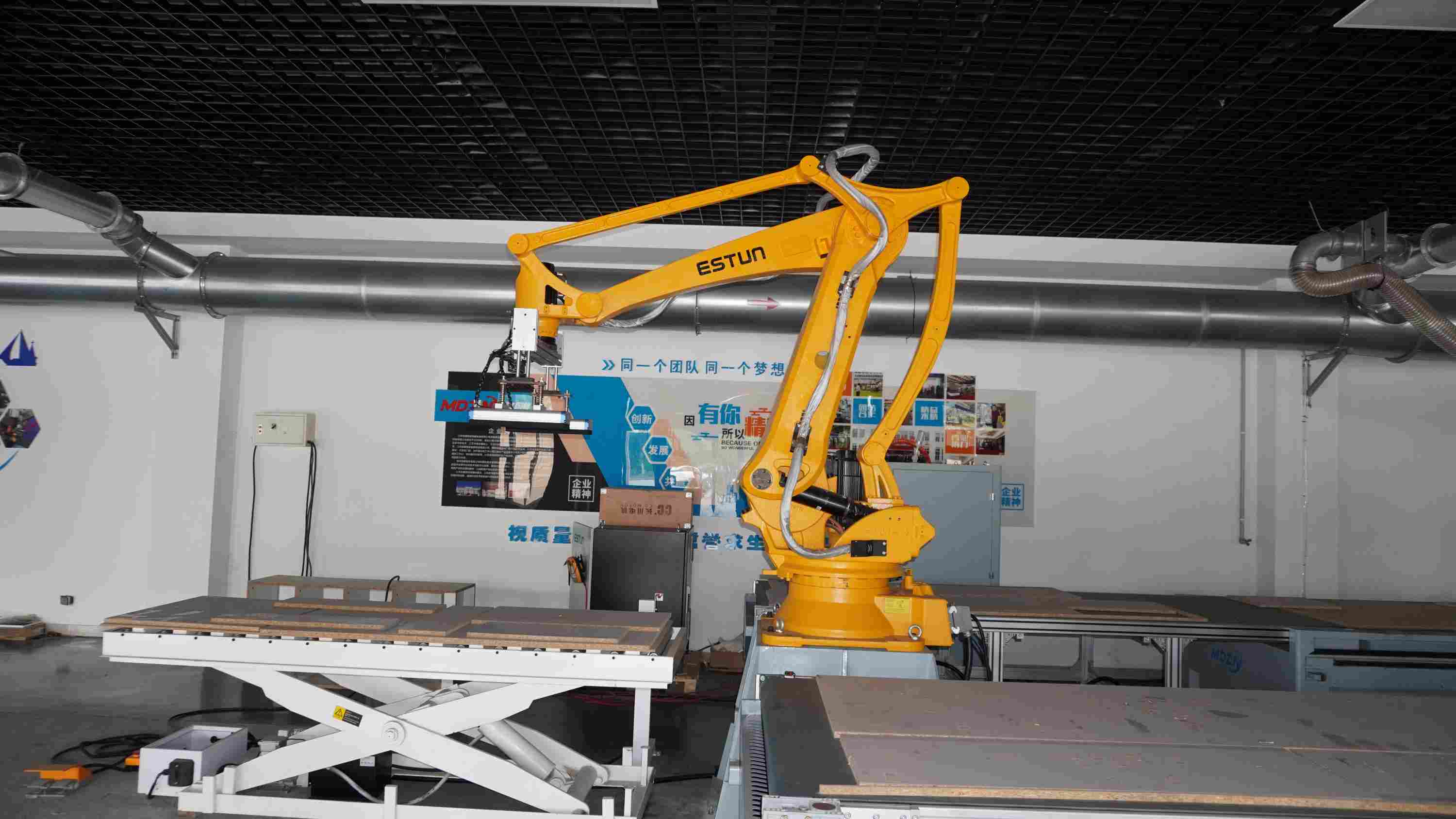
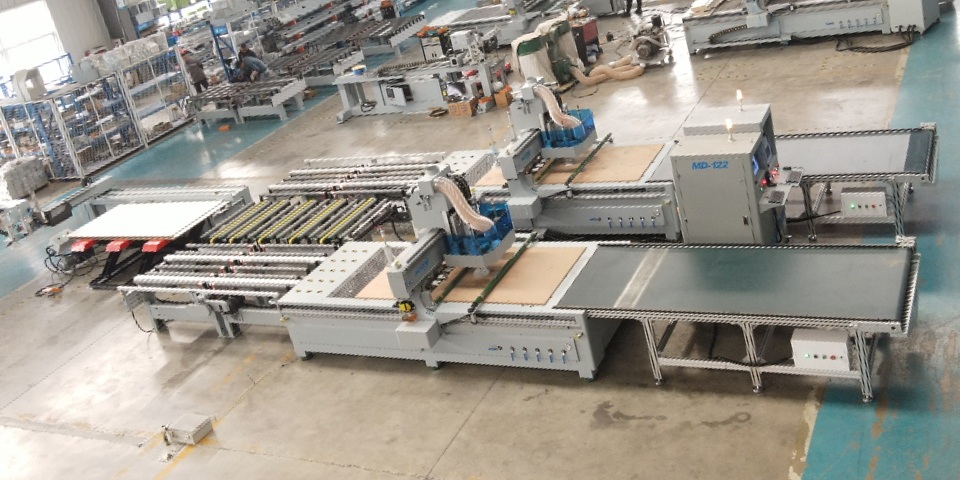
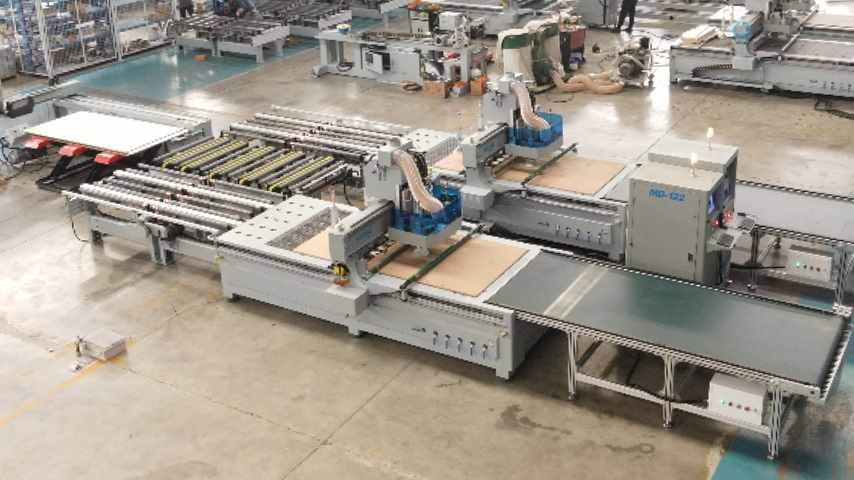
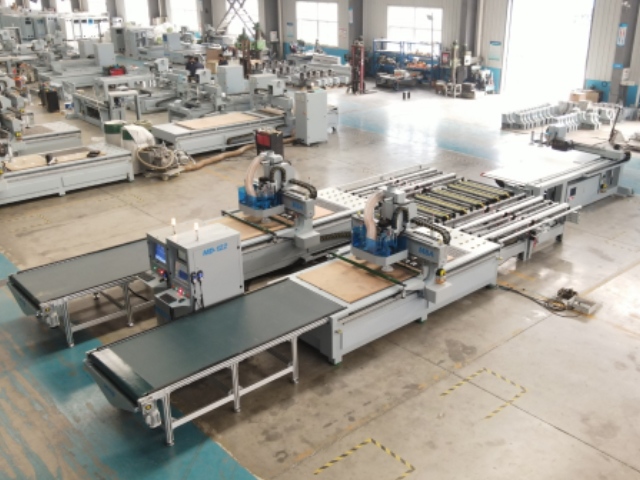
头部背景图片

How Much Does a CNC Machine Typically Cost?

2026-08-28

How Much Does a CNC Machine Typically Cost? 

For most buyers asking how much does a CNC cost, a small CNC or hobby CNC machines may run $1,500–$5,000, while a professional 3-axis CNC machine or 3-axis CNC milling machine for a machine shop often costs $20,000–$150,000. Larger CNC machining centers, 5-axis systems, or expensive CNC machines exceed $150,000+.

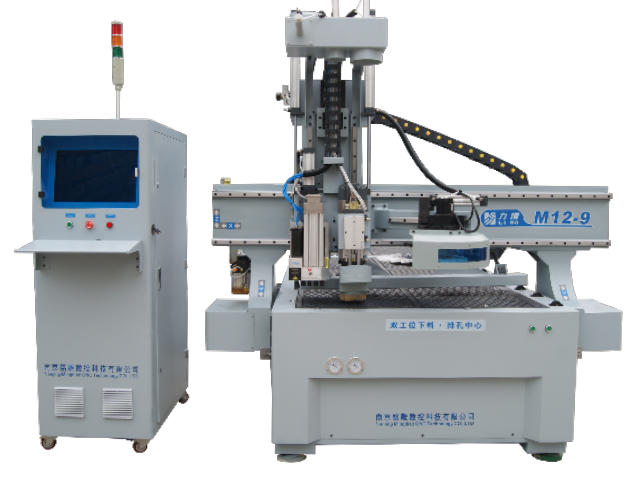
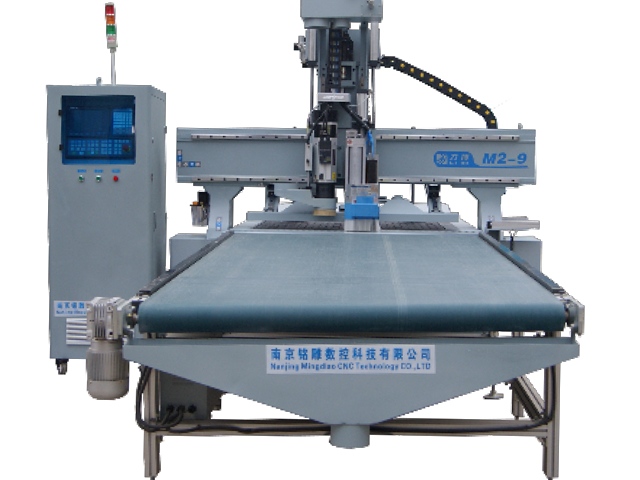
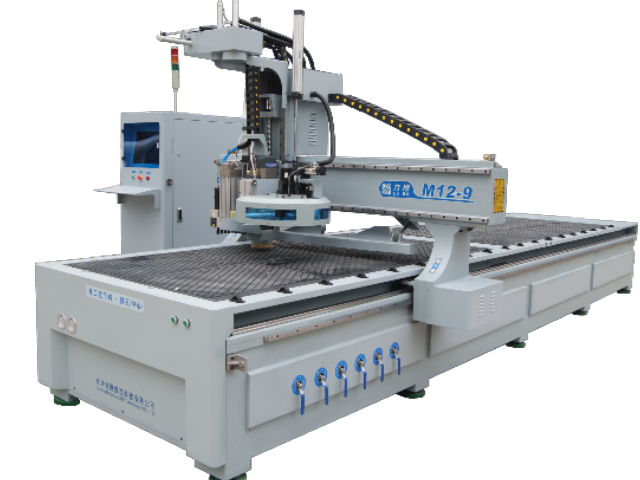
stone carving machine for sale

If you’re in the manufacturing business or looking to start a machine shop, this is likely the first question you ask. And the short answer is: it depends entirely on what you need to cut, how fast you need to cut it, and how precise you need to be.

The price can be as low as a few thousand dollars for a hobby-grade machine or climb well over $150,000 for a high-end industrial production center. Here is a straightforward breakdown for the international buyer.

stone cnc router machine

The Price Tiers: From Workshop to Factory Floor

We can break down new CNC machine prices into three broad tiers to help you budget effectively:

1. Entry-Level / Light Commercial ($5,000 - $20,000) : This tier is ideal for start-ups, small job shops, or prototyping businesses. These are usually 3-axis machines, often routers or desktop mills. They are great for wood, plastics, and light non-ferrous metals. For example, the ShopBot Carolina starts around $19,813 for a full-size 4'x4' configuration, while some 4x8 router kits from brands like Avid CNC start near $10,309 (though expect to add a few thousand for essential upgrades)

granite cnc machining center

2. Mid-Range Professional ($20,000 - $60,000) : This is the "sweet spot" for many serious shops. You are looking at machines with more rigid welded steel frames, automatic tool changers (ATC), and higher spindle power (8-12 HP). These are designed for daily commercial use. The Tormach 770MX CNC mill is a great example, starting at $25,995 for precision metalworking . For cabinet making or woodworking, a mid-range 4x8 machine like the Basic R4.8 (with a 4HP Italian spindle) is priced around $29,399

woodworking cnc machine

3. Industrial / High Production ($60,000 - $150,000+)

 When you need to run 24/7 with high-speed servo drives, 12+ tool ATCs, and automated loading systems, you're in the industrial bracket. These are heavy-duty machines built for automotive, aerospace, and high-volume manufacturing . A 5-axis machining center, for instance, can easily cost between $150,000 and over $1.5 million depending on the brand (European brands like DMG MORI command a premium, while Asian brands offer strong value)

cnc for metal fabrication

The "Hidden" Costs: Look Beyond the Sticker Price

Here is the most critical piece of advice for any buyer: The purchase price is often just 30-50% of the true cost of ownership . Do not spend your entire budget on the machine itself. You must factor in:

  • Tooling and Workholding: Expect to spend $500 - $1,500+ on your initial set of end mills, tool holders, and vises .

  • Software: CAD/CAM software is essential. Some options are free (like Fusion 360), but professional nesting software can cost $500 to $15,000+ annually

C&C router manufacturer
  • Installation and Power: Does your facility have 3-phase power? If not, a rotary phase converter costs $1,500 - $4,000 .

  •  
  • Maintenance and Downtime: A cheaper machine that breaks down frequently costs far more in lost production than a premium machine with reliable service support .

CNC machine center manufacturer

New vs. Used & Country of Origin

The debate is always between buying new or used, and East vs. West. European and American machines (e.g., Haas, Mazak, DMG MORI) offer higher resale value, better support, and superior rigidity but come at a 30-50% premium . Asian brands (Chinese, Taiwanese) offer aggressive entry prices; for example, some entry-level Chinese 4x8 routers can be found for as low as $1,500-$5,500 . However, quality control and after-sales support can be a concern.

CNC wood engraver manufacturer

If you are a beginner, buying new is often recommended to avoid inheriting worn-out guide rails or outdated controllers . However, the used machinery market is a fantastic place to acquire high-end industrial equipment for a fraction of the original price if you know what to inspect.


For a commercial business just starting out, plan a total budget of at least $25,000 to $35,000 for your first reliable, professional-grade machine plus tooling and software .

CNC cutting machine factory

Always ask your supplier for a Total Cost of Ownership analysis and, most importantly, get a reference from an existing customer in your industry. Happy machining!

📩 Send us your workpiece size and production needs. We’ll recommend the best CNC wood machine for you.

WhatsApp:'+86 15358102610

📧 Email: zhouni@jsmdzn.com

🌐 Website:https://www.mdzncnc.com


How Outrageous Can Custom Furniture Be?

2026-08-28

How Outrageous Can Custom Furniture Be?

When we think of furniture, we think of function—tables for eating, chairs for sitting, beds for sleeping. But in the world of custom furniture, function is just the starting point. The real question is: how far can we push the boundaries of design, material, and imagination?

The short answer? As outrageous as you dare.

At our workshop, we’ve seen requests that range from the whimsical to the jaw-dropping. A dining table shaped like a giant swirling galaxy, with LED-lit resin rivers flowing through black walnut. A bookshelf that doubles as a secret doorway, activated by pulling a specific "book" on the third shelf. A sofa designed to look like a giant croissant—because why shouldn't your living room feel like a Parisian bakery?

But outrageous doesn’t always mean loud. Sometimes, it’s about defying physics: a cantilevered desk that appears to float in mid-air, or a chair that looks like it’s melting but is, in fact, solid as oak. We’ve crafted beds that resemble nests suspended from the ceiling, and coffee tables that transform into dining tables with a simple, elegant mechanism that feels like magic.

The beauty of custom furniture is that it tells a story—your story. It’s not about following trends; it’s about creating a piece that sparks conversation, evokes emotion, and reflects your personality. Want a wardrobe that looks like a Tardis? Done. A bar cabinet shaped like a vintage sports car? Absolutely. A mirror that frames your reflection with geometric shards of colored glass? Let’s talk.

Of course, with great outrageousness comes great craftsmanship. Every wild idea requires precision engineering, skilled artisans, and a deep understanding of materials. We don’t just build furniture—we solve problems. How do we make a glass table strong enough to hold a dinner party while looking like a frozen wave? How do we carve a single piece of wood into a functional sculpture?

The answer is experience, passion, and a refusal to say “impossible.”

To our international clients: here’s the thing. Custom furniture is not just an expense—it’s an investment. An investment in quality, in originality, and in a story that will be told for generations. Whether you’re a hotelier looking to wow your guests, a homeowner seeking a centerpiece, or a designer chasing the next viral moment, we are your partners in the impossible.

So, how outrageous can custom furniture be? As outrageous as your imagination allows. And if you don’t have an idea yet, we’ll help you find one. Because the only limit is not the wood, the metal, or the resin—it’s the courage to dream differently.

Ready to be outrageous? Let’s create something the world has never seen.

Contact us today. Your masterpiece is waiting.


   WhatsApp:'+86 15358102610

📧 Email: zhouni@jsmdzn.com

🌐 Website:https://www.mdzncnc.com/ 

How stress-relieving can hardcore woodworking be?

2026-08-28

Hardcore Woodworking: How Stressful Can It REALLY Get? (Spoiler: It’s the Best Therapy You’ve Never Tried)

Let’s be honest. Most of us spend our days in a cage of pings, rings, and notifications. Our stress isn’t physical anymore—it’s digital, abstract, and relentless. You can’t see it, you can’t touch it, and you certainly can’t chop it in half with an axe.

furniture line for cabinet shops

But what if I told you that the most effective stress relief on the planet doesn’t come from a spa, a retreat, or a meditation app? It comes from a dusty garage, a sharp chisel, and a piece of wood that doesn’t care about your deadlines.


Welcome to the world of hardcore woodworking. And no, we’re not talking about painting a birdhouse with your kids. We’re talking about the heavy stuff: hand-cut dovetails, massive timber framing, flattening rough slabs with a #5 plane, and the raw, unfiltered act of taking a chaotic log and forcing it into beautiful submission.

furniture line with conveyor system

So, just how stress-relieving can this get? Let’s break it down in three levels of "release."

Level 1: The Physical Exhaustion (The Good Kind)

Sitting at a desk is a modern-day torture device. Our bodies hold tension in our shoulders and necks until we feel like a coiled spring. Woodworking changes the game because it demands your entire body.

When you’re pushing a #7 jointer plane across a 6-foot white oak slab, you aren't thinking about your email inbox. You’re focusing on your stance, your weight distribution, and the angle of your blade. The shavings curl out in long, paper-thin ribbons, and with each push, you feel the tension physically leaving your muscles. This isn’t just a hobby; it’s resistance training with a purpose. By the time you’ve flattened that board, you’re sweating, your arms are burning, but your mind? It’s silent. Pure silence.

Level 2: The "Flow State" (Where Time Disappears)

Psychologists call it "Flow"—that state where you are so deeply immersed in an activity that the outside world melts away. Woodworking forces you into Flow because it requires 100% of your cognitive attention.

There is no multitasking in hardcore woodworking. You cannot check Instagram while cutting a mortise and tenon joint. You cannot take a work call while chiseling a curved edge. The moment your mind wanders, the wood splits, or the chisel slips. That immediate, unforgiving feedback forces you to be present.

And here is the magic: When you are fully present, stress cannot exist. Worrying about the future or regretting the past requires mental bandwidth. Woodworking takes all of that bandwidth and uses it to calculate grain direction and cutting angles. It’s a cognitive hijacking, and it works like a charm.

Level 3: The Tangible Victory (The Antidote to Digital Life)

This is the "hardcore" part that hits different. In the digital world, you can work for 10 hours and have nothing to show for it but a few edited lines of text or a full calendar. It’s soul-crushing.

In woodworking, the reward is physical. That heavy, smooth plank you just surfaced? It’s real. You can run your hand over it and feel the silky surface. The dovetail joint you spent 45 minutes fitting? It slides together with a satisfying thump and requires no glue to hold—pure geometry.

This tactile reward is primal. It taps into the deepest part of our human psyche that craves creation. You look at a piece of walnut and see a future table; you look at a maple off-cut and see a future keepsake box. The feeling of "I made this" is a direct antidote to the feeling of "I am useless" that digital burnout often brings.

The Hardcore Truth

Is woodworking easy? No. It’s frustrating, dusty, and occasionally painful (nobody talks about the splinters). But that difficulty is exactly what makes it so relieving. Because when life feels out of control, there is deep comfort in a craft that has rules. The wood has grain; you must cut with it, not against it. You can’t rush it; you can’t fake it.

The stress doesn’t disappear—it gets transferred. It moves from your brain, down your arms, through your tools, and ends up as a pile of shavings on the floor. You sweep it up, toss it out, and suddenly, you feel lighter.

So, if you’re scrolling through your feed, feeling that familiar knot of anxiety in your chest, consider this your sign. You don't need a fancy workshop. You just need a piece of wood and something sharp. Trust me, the wood won't judge you. It’ll just wait for you to shape it.

And you might just shape yourself in the process.

Need help sourcing the perfect machine? Let's talk! We supply top-quality CNC routers for factories worldwide. 🌍

WhatsApp:'+86 15358102610

📧 Email: zhouni@jsmdzn.com

🌐Website:https://www.mdzncnc.com/ 


Smart Carpenters on the Furniture Production Line

2026-08-28


Smart Carpenters on the Furniture Production Line

In an era where automation and artificial intelligence dominate industrial conversations, the image of a carpenter—covered in sawdust, wielding a chisel with practiced precision—might seem like a relic of the past. But step into a modern furniture production line, and you will witness a revolution that is not about replacing human skill, but elevating it. Welcome to the age of the smart carpenter.

Gone are the days when furniture making was purely a manual craft, reliant solely on the eye and hand of a master artisan. Today’s production floor is a symphony of human intelligence and digital precision. The "smart carpenter" is not a robot; it is a highly skilled professional who programs CNC machines, interprets 3D design models, and fine-tunes automated sanding and finishing lines—all while maintaining the soul of woodworking: an intimate understanding of wood grain, texture, and structural integrity.

This fusion of tradition and technology is reshaping what we offer to the global market. For our international clients, this means consistency without compromise. Every batch of dining tables, office desks, or bedroom sets that leaves our factory carries the hallmark of human craftsmanship, but with the flawless repeatability that only smart machinery can provide. We are not mass-producing furniture; we are precision-crafting it, at scale.

What makes our smart carpenters indispensable? First, their ability to adapt. In a world of custom orders and just-in-time delivery, our production line pivots seamlessly from a minimalist Scandinavian design to an ornate French classic. The smart carpenter interprets complex CAD files, adjusts tool paths in real time, and troubleshoots material variations—whether it is solid oak, walnut, or engineered wood. Second, their commitment to quality. Sensors and laser guides ensure that every cut, joint, and curve meets exacting tolerances. But it is the human eye that catches the subtle color shift, the slight grain irregularity, or the faint surface imperfection that no sensor can detect.

Sustainability is another pillar of our smart carpentry. By leveraging advanced nesting software, our carpenters maximize yield from every plank, reducing waste by up to 20% compared to traditional methods. And with energy-efficient machinery and water-based finishes, we are not only crafting beautiful furniture but also honoring the forests that supply our raw materials. This resonates deeply with eco-conscious buyers from Europe, North America, and beyond.

For our overseas partners, this transformation means reliability. When you place an order with us, you are not gambling on the variable skill of individual artisans. You are investing in a system where human expertise and digital intelligence work in harmony—delivering furniture that fits your specifications, passes rigorous quality checks, and arrives on time, every time.

Yet, we never forget the heart of woodworking. Our smart carpenters still run their hands over every finished piece, feeling for the smoothness that only sanding with the grain can achieve. They still discuss joinery techniques over morning coffee, sharing tips passed down through generations. The machine does the heavy lifting and the repetitive cuts; the human adds the judgment, the creativity, and the passion.

In the global furniture market, where competition is fierce and margins are thin, our smart carpenters are our competitive edge. They allow us to offer customization at near-production-line efficiency, to maintain lead times that satisfy the most demanding retailers, and to build a reputation for excellence that transcends language and borders

So, the next time you admire a beautifully crafted chair or a sleek modular shelf, remember: behind that perfect finish is not just a machine, but a smart carpenter who mastered both the art of wood and the science of digital manufacturing. At our factory, we are proud to be where tradition meets tomorrow—and we invite you to be part of that journey.

Let’s build something smarter together.

Contact us today to explore our latest collections or to discuss your custom furniture project. Your vision, our craftsmanship—perfected by intelligence.


 WhatsApp:'+86 15358102610

📧 Email: zhouni@jsmdzn.com


🌐 Website:https://www.mdzncnc.com/ 


What Type of End Mill is Best for Aluminum?

2026-08-28

 What Type of End Mill is Best for Aluminum?

Let’s be honest: machining aluminum can be a love-hate relationship. One minute you’re pushing high speeds, feeling like a champion. The next minute, your end mill is welded to the workpiece with a blob of sticky aluminum, and you’re reaching for the hammer to chip it off. Sound familiar?

cnc for marble carving

If you’ve ever snapped a tool or ruined a surface finish because of chip welding, you know the frustration. The truth is, you can’t just grab any end mill off the shelf and expect great results. Aluminum is soft, but it’s “gummy.” It doesn’t chip like steel; it wants to smear.

So, what is the absolute best end mill for aluminum? Let’s cut through the noise.

cnc stone engraver machine

The Short Answer (For the Busy Shop Floor):
For 90% of general aluminum milling applications, the 3-flute, solid carbide end mill with a high helix angle (around 40°) and a polished or ZrN coating is your undisputed champion.

But wait—before you run off to place an order, let’s break down the "why" behind the choice, because the "best" tool actually changes depending on what you are doing.

cnc router for headstones

Rule #1: Chip Evacuation is Everything

Aluminum produces massive chips relative to the depth of cut. If those chips don’t get out of the cut zone immediately, they will re-weld to the cutting edge. This is called Built-Up Edge (BUE), and it’s the #1 killer of tools in aluminum.

  • 2-Flute: The classic choice for slotting and deep pocketing. Why? Because the big gullets (the spaces between the teeth) give the chips plenty of room to escape. If you are cutting a deep channel, a 2-flute is your safest bet.

cnc router for wood carving
  • 3-Flute (The Sweet Spot): This is the modern workhorse. It gives you one extra cutting edge compared to a 2-flute, which means you can push feed rates significantly higher. Plus, it offers more core rigidity, which reduces deflection and gives you a better surface finish on walls. It handles both profiling and light slotting with ease.

  • Avoid 4-Flute at All Costs: Please, do not use a standard 4-flute end mill in aluminum. The flutes are too tight. It’s like trying to funnel a river through a garden hose—it will clog, and the tool will snap within seconds.

cnc router for aluminum parts

Rule #2: Geometry Matters (Don’t Ignore the Helix)
A high helix angle (typically 35° to 45°) is not a suggestion; it's a requirement. A higher helix creates a sharper shearing action that slices through the aluminum rather than pushing it. This reduces heat generation and directs the chips upward and out of the cut. If you are doing high-speed machining, look for "variable helix" geometry—this breaks up harmonics and prevents chatter, allowing you to run faster speeds without that annoying squeal.

cnc router for acrylic signs

Rule #3: Coating is Not Just for Show
Here is a common mistake: using a TiAlN (Titanium Aluminum Nitride) coating on aluminum. The “Al” in that coating stands for Aluminum. When heat builds up, the coating will chemically react with your workpiece and literally “weld” itself to the material. It’s a disaster.

best cnc router for woodworking

Instead, you want a non-stick surface. Look for:

  • Uncoated Polished Carbide: The polished rake face reduces friction and keeps chips sliding out.

  • ZrN (Zirconium Nitride): This is the gold-colored coating. It has excellent lubricity and is harder than uncoated carbide.

  • DLC (Diamond-Like Carbon): The ultimate choice for abrasive aluminum alloys. It’s slick, reduces friction to near zero, and lasts a very long time.

cnc router for pvc cutting

Substrate: Solid Carbide vs. HSS
While High-Speed Steel (HSS) is cheaper, please invest in Solid Carbide. Sub-micrograin carbide is rigid and holds that sharp edge much longer. In aluminum, you need a sharp edge to shear, not rub. Carbide allows for much higher RPMs without flexing.

cnc router for foam carving

The Ultimate Quick-Reference Guide:

  • For Deep Slotting: 2-Flute, Carbide, Polished finish.

  • For High-Speed Roughing & Profiling: 3-Flute, Carbide, ZrN or DLC coating.

  • For Thin-Walled Parts (to reduce deflection): 3-Flute, High Helix (45°), Uncoated.

  • For Micro-Machining (small diameters): 3-Flute with neck relief for better rigidity.

cnc router for wooden crafts

The Bottom Line
Don’t treat aluminum like steel. The material is forgiving, but the cutting tools are not. Choosing the correct flute count, a sharp high-helix geometry, and a slippery coating will instantly increase your spindle life, improve your surface finish to a mirror-like quality, and save you hundreds of dollars in scrapped parts.

furniture production line equipment

Want to optimize your aluminum machining?

📩 Send us your workpiece size and production needs. We’ll recommend the best CNC wood machine for you.

WhatsApp:'+86 15358102610

📧 Email: zhouni@jsmdzn.com

🌐 Website:https://www.mdzncnc.com/ 


CNC Workholding Solutions for Milling Machines

2026-08-25

A high-performance CNC milling machine does not always guarantee high-quality machining results. Many manufacturers still face problems such as workpiece vibration, unstable accuracy, poor surface finish, and long setup time.

The reason may not be the machine itself. Without proper workholding, the cutting force can affect part stability and reduce machining consistency.

The right CNC workholding solution helps secure the workpiece, improve machining accuracy, reduce setup time, and increase production efficiency.

In this guide, we will explore the common CNC workholding solutions for milling machines and how to choose the right option for different machining requirements.


 CNC Workholding Solutions


Why CNC Workholding Matters in Milling Operations

In CNC milling, workholding is not just about keeping a part in place. It directly affects machining accuracy, production efficiency, and overall process stability. A suitable workholding solution ensures the workpiece remains secure during cutting, allowing the CNC machine to perform at its full capability.


Improve Machining Accuracy and Repeatability

During milling operations, cutting forces can cause slight movement or vibration if the workpiece is not properly secured. This may lead to:

  • Dimensional errors
  • Poor surface finish
  • Inconsistent part quality

A reliable CNC workholding solution provides stable positioning and reduces part movement, helping manufacturers achieve more accurate and repeatable machining results.


Reduce Setup Time and Improve Productivity

Modern manufacturing often requires machining complex parts with fewer setups, including multi-side machining and 5-axis operations. These applications require workholding solutions with higher rigidity, better accessibility, and reliable positioning.

Efficient workholding systems help:

  • Speed up part setup
  • Reduce fixture change time
  • Increase overall machining efficiency
  • Support Complex CNC Machining Applications

The right workholding system allows manufacturers to handle more challenging machining tasks while maintaining accuracy and efficiency.


Common CNC Workholding Solutions for Milling Machines

Different machining applications require different workholding methods. The right solution depends on factors such as part shape, machining process, production volume, and accuracy requirements. Below are some of the most common CNC workholding solutions used in milling operations.


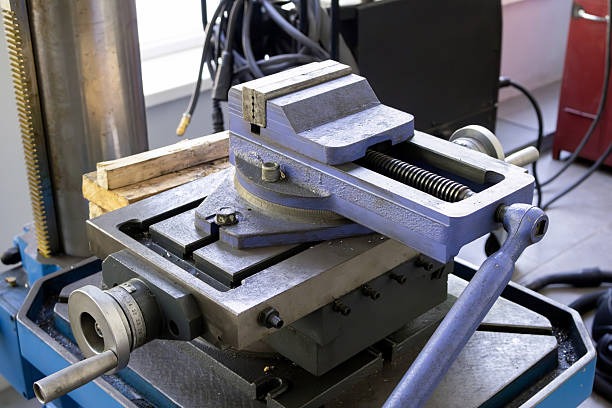
CNC Machine Vise: A Reliable Solution for General Milling

CNC machine vises are one of the most widely used workholding solutions for milling machines. They are commonly used for standard parts with simple shapes and provide a balance between clamping force, flexibility, and ease of operation.

Suitable for:

  • General mechanical components
  • Small and medium-sized parts
  • Standard milling operations

Advantages:

  • Easy setup and operation
  • Strong and stable clamping
  • Good repeatability for batch machining

However, standard vises may have limitations when machining complex-shaped parts or applications requiring better tool accessibility.


 CNC Machine Vise


Custom CNC Fixtures: For Complex and Precision Parts

When standard workholding cannot meet specific machining requirements, custom CNC fixtures provide a more specialized solution. These fixtures are designed according to the part geometry and machining process to achieve better positioning and stability.

Suitable for:

  • Aerospace components
  • Automotive parts
  • Mold and die components

Advantages:

  • Customized positioning
  • Reduced part movement during cutting
  • Improved machining consistency

Custom fixtures are especially useful for manufacturers producing complex parts that require high precision and repeatability.


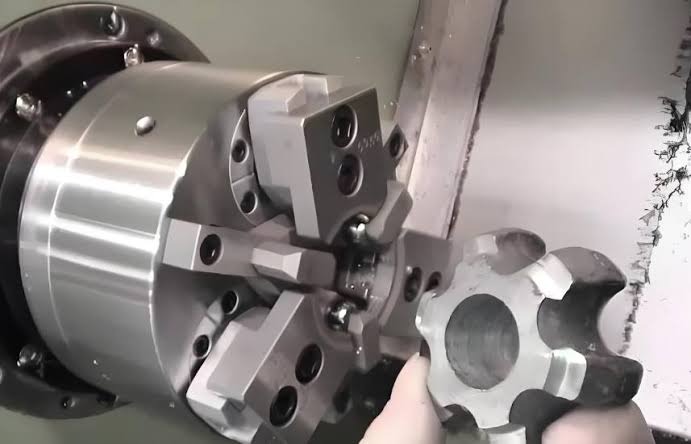
 CNC Fixtures


Modular Workholding Systems: Flexible Solutions for Different Parts

Modular workholding systems are designed for manufacturers that need flexibility when machining different types of components. Instead of creating a new fixture for every part, modular systems allow users to quickly adjust the setup.

Suitable for:

  • Multiple part types
  • Small and medium batch production
  • Flexible manufacturing

Advantages:

  • Faster changeover
  • Reusable components
  • Reduced setup preparation time

This makes modular workholding a practical choice for companies handling various machining jobs.


Zero-Point and Pallet Workholding Systems: For High-Efficiency Production

For advanced CNC machining applications, zero-point and pallet workholding systems help manufacturers reduce setup time and improve automation capability. These systems allow fast fixture changes while maintaining accurate positioning.

Suitable for:

  • Horizontal machining centers
  • 5-axis machining centers
  • Automated production lines

Advantages:

  • Quick fixture replacement
  • Reduced machine downtime
  • Improved production efficiency

These solutions are commonly used in high-volume and precision manufacturing environments where productivity is a priority.


How to Choose the Right CNC Workholding Solution?

Choosing the right CNC workholding solution depends on more than just securely holding the workpiece. Manufacturers need to consider part characteristics, machining requirements, and production goals to achieve the best balance between accuracy, efficiency, and cost.


Consider Workpiece Size and Geometry

The shape, size, and complexity of the workpiece are important factors when selecting a workholding method.

For simple rectangular parts, a standard CNC vise is often an efficient and cost-effective choice. However, complex components with irregular shapes may require custom CNC fixtures to provide better support and positioning.

Large or heavy parts may require modular or dedicated workholding solutions to ensure stability during heavy-cutting operations.


Consider Your Machining Requirements

Different machining processes require different levels of rigidity and accessibility.

For heavy cutting operations, the workholding system should provide:

  • Strong clamping force
  • High rigidity
  • Stable support to reduce vibration

For precision machining, the priority is:

  • Accurate positioning
  • Minimal workpiece deformation
  • Consistent machining results

For multi-side or 5-axis machining, a low-profile and flexible workholding solution is preferred to provide better tool access and reduce the need for multiple setups.


Consider Production Volume

Production volume also affects the most suitable workholding choice.

For low-volume production, standard vises and flexible fixtures are usually enough because they provide easy setup and lower investment costs.

For medium-volume production, modular workholding systems can improve efficiency by allowing faster changeovers between different parts.

For high-volume production, dedicated fixtures or automated workholding systems are often preferred to reduce setup time and maximize machine utilization.


Match Workholding with Your CNC Machine Type

The CNC machine configuration also influences workholding selection.

Vertical Machining Centers (VMCs) are commonly used for general milling and flexible production. CNC vises and modular fixtures are often suitable for these applications.

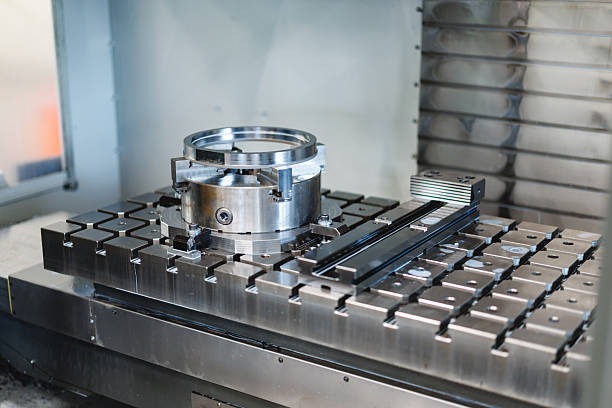
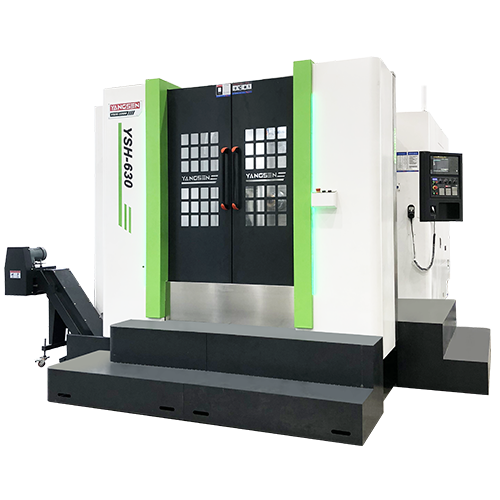
Horizontal Machining Centers (HMCs) are designed for high-efficiency and multi-face machining. Pallet systems and zero-point workholding can help reduce repositioning time.

5-Axis Machining Centers require workholding solutions with better accessibility and lower interference, allowing the machine to reach multiple surfaces with fewer setups.

By matching the workholding solution with both the part requirements and CNC machine type, manufacturers can achieve higher machining efficiency and more consistent results.


CNC Workholding Solutions for Different Milling Machines

Different CNC milling machines have different machining capabilities, so the ideal workholding solution should match the machine structure, machining method, and production requirements. Selecting the right combination of machine and workholding system helps manufacturers improve stability, reduce setup time, and achieve better machining results.


Workholding Solutions for Vertical Machining Centers

Vertical machining centers (VMCs) are widely used for general precision machining, mold manufacturing, and small to medium-sized component production. Since the spindle moves vertically, workholding solutions need to provide reliable clamping while maintaining good accessibility for cutting tools.

Common solutions include:

  • CNC machine vises for standard parts
  • Modular fixtures for flexible production
  • Custom fixtures for complex components

For manufacturers using VMCs, the workholding system should balance rigidity, flexibility, and ease of setup to support different machining tasks.


Workholding Solutions for Horizontal Machining Centers

Horizontal machining centers (HMCs) are commonly used for high-volume production and multi-side machining. Their horizontal spindle design allows better chip removal and efficient machining of complex parts.

Suitable workholding solutions include:

  • Pallet workholding systems
  • Zero-point clamping systems
  • Dedicated fixtures for batch production

These solutions help reduce repeated setups, improve positioning accuracy, and maximize machine utilization, making them ideal for manufacturers requiring efficient and consistent production.


Workholding Solutions for 5-Axis Machining Centers

5-axis machining centers can machine complex parts from multiple angles in a single setup, but they also require workholding solutions with better accessibility and stability.

Recommended solutions include:

  • Low-profile fixtures
  • Custom CNC fixtures
  • Advanced modular workholding systems

The right workholding solution allows more tool movement, reduces interference, and helps manufacturers achieve higher accuracy when machining complex components such as aerospace parts, molds, and precision components.

A complete machining solution requires both a capable CNC machine and a suitable workholding system. By selecting the right combination, manufacturers can improve machining efficiency, reduce production challenges, and get the most value from their CNC equipment.


How CNC Workholding Improves Machining Performance

The performance of a CNC milling machine depends not only on machine accuracy and cutting tools but also on how securely the workpiece is held during machining. A suitable workholding solution can directly improve machining stability, production efficiency, and overall manufacturing results.


Improve Surface Finish and Machining Accuracy

Unstable workholding can cause vibration, part movement, and cutting instability, which may affect surface quality and dimensional accuracy.

A reliable CNC workholding solution helps:

  • Minimize vibration during cutting
  • Maintain consistent part positioning
  • Improve surface finish quality
  • Achieve more accurate machining results

This is especially important for precision components that require tight tolerances and consistent quality.


Extend Tool Life and Reduce Tool Wear

Poor workholding can create additional cutting forces and vibration, causing faster tool wear and unexpected tool damage.

With stable clamping, manufacturers can:

  • Maintain consistent cutting conditions
  • Reduce tool impact and vibration
  • Improve tool service life
  • Lower tooling costs

A stable machining process not only improves part quality but also helps reduce overall production expenses.


Increase Production Efficiency and Reduce Downtime

In modern manufacturing, reducing non-cutting time is essential for improving productivity. Slow setup processes and frequent adjustments can significantly reduce CNC machine utilization.

Efficient workholding systems help:

  • Shorten setup and changeover time
  • Reduce manual adjustments
  • Improve machine utilization
  • Support continuous production

By selecting the right workholding solution, manufacturers can maximize the performance of their CNC milling machines and achieve more efficient production.


FAQs

1. What Is CNC Workholding for Milling Machines?

CNC workholding refers to the devices and systems used to securely position and clamp a workpiece during CNC milling operations. It helps maintain part stability, improve machining accuracy, and reduce movement caused by cutting forces.

Common CNC workholding solutions include machine vises, custom fixtures, modular systems, and zero-point clamping systems.

2. Why Is Workholding Important in CNC Milling?

Workholding plays an important role in machining performance because even a small amount of workpiece movement can affect accuracy and surface quality.

A proper workholding solution helps:

  • Reduce vibration during cutting
  • Improve machining repeatability
  • Shorten setup time
  • Increase overall production efficiency

3. What Is the Best Workholding Solution for CNC Milling?

There is no single best workholding solution for all applications. The right choice depends on the part size, geometry, machining process, and production volume.

For example:

  • CNC vises are suitable for general milling operations
  • Custom fixtures are better for complex precision parts
  • Modular systems are ideal for flexible production
  • Zero-point systems are suitable for high-efficiency and automated machining

4. How Do I Choose a CNC Fixture for My Parts?

When selecting a CNC fixture, manufacturers should consider:

  • Workpiece size and shape
  • Required machining operations
  • Cutting forces
  • Accuracy requirements
  • Production volume

A suitable fixture should provide enough clamping force while minimizing deformation and allowing easy tool access.

5. Do 5-Axis CNC Machines Need Special Workholding Solutions?

Yes. 5-axis machining requires workholding solutions with better accessibility and lower interference because the machine can approach the workpiece from multiple angles.

Low-profile fixtures, custom fixtures, and modular workholding systems are commonly used to maximize tool reach and reduce the need for multiple setups.


Conclusion

The right CNC workholding solution helps manufacturers achieve better machining accuracy, reduce setup time, and improve production efficiency. A suitable workholding method, combined with a reliable CNC machining center, allows machines to perform at their full potential.

When selecting a CNC machining solution, consider both machine capability and workholding requirements to achieve stable and consistent results.

Contact CNC Yangsen to find the right CNC machining solution for your production needs.

Send Inquiry To CNCYangsen

Top 10 Vertical Mill Manufacturers

2026-08-25

Vertical mills are widely used for precision parts, molds, automotive components, and general metalworking, but not every machine delivers the same accuracy, rigidity, or productivity.

For buyers, the real challenge is choosing a manufacturer that can provide stable machining performance, the right spindle and machine configuration, reliable service, and a reasonable investment cost.

So, which vertical mill manufacturers are worth considering?

This guide compares 10 leading vertical mill manufacturers, helping you quickly understand their strengths and find the right supplier for your machining needs.


Top 10 Vertical Mill Manufacturers


Brand Name

Founded

Headquarters

Special Features

DMG MORI

1870 / 1948

Germany / Japan

Premium CNC milling solutions with advanced 5-axis, automation, and digital manufacturing technologies

MAZAK

1919

Japan

Broad vertical machining portfolio with strong automation and integrated manufacturing capability

Okuma

1898

Japan

In-house CNC, spindle, drive, and thermal control technologies for stable precision machining

Makino

1937

Japan

High-speed and high-precision vertical milling solutions for mold, aerospace, and complex parts

Haas Automation

1983

USA

Broad and cost-effective vertical mill range backed by an extensive international service network

DN Solutions

1976

South Korea

Production-oriented vertical machining centers covering general and heavy-duty applications

CNC YANGSEN

2003

China

Cost-effective vertical milling solutions with flexible configurations and large-scale manufacturing capability

HURCO

1968

USA

Vertical mills featuring conversational CNC programming for flexible small-batch production

Matsuura

1935

Japan

Precision vertical machining combined with automation and unattended manufacturing technologies

CHIRON

1921

Germany

High-speed and high-productivity vertical machining centers for automated production


1. DMG MORI


DMG MORI 


Type of Business: Global manufacturer of high-precision CNC machine tools and integrated manufacturing solutions.

Location: Germany

Year Established: 1870

Manufacturer Introduction:

DMG MORI is one of the world's leading CNC machine tool manufacturers, with around 13,500 employees, 18 production plants, and 128 locations across 45 countries. Its manufacturing solutions cover milling, turning, grinding, drilling, additive manufacturing, and automation.

The company has more than 100 years of milling experience and offers vertical mills ranging from entry-level 3-axis machines to high-speed and high-precision machining centers.

DMG MORI focuses on combining machine rigidity, spindle performance, thermal management, precision, and automation.

Its vertical mills are widely used in automotive, aerospace, die & mold, medical, and precision component manufacturing, giving buyers options for both general-purpose machining and demanding production environments.

Business Scope:

  • Vertical Milling Machines
  • Vertical Machining Centers
  • 5-Axis Machining Centers
  • Horizontal Machining Centers
  • CNC Turning Machines
  • Grinding Machines
  • Automation & Digital Manufacturing Solutions

Recommended Reason:

DMG MORI is recommended for manufacturers that prioritize high precision, machining stability, automation, and a broad choice of machine configurations. Its extensive vertical milling lineup makes it suitable for everything from general 3-axis machining to high-speed and high-precision production.

Send Inquiry


2. MAZAK

 MAZAK


Type of Business: Global manufacturer of CNC machine tools and integrated automation solutions.

Location: Aichi, Japan

Year Established: 1919

Manufacturer Introduction:

Founded in 1919, Yamazaki Mazak has more than a century of experience in machine tool manufacturing and has developed into one of the world's major CNC machine tool manufacturers.

MAZAK operates a global manufacturing system with 11 production plants, including facilities in Japan, the United States, the United Kingdom, Singapore, and China.

The company provides a broad range of vertical machining solutions, with the VCN Series serving as one of its key vertical machining center lines. These machines focus on high rigidity, machining accuracy, spindle performance, and production efficiency for both general and precision machining.

Beyond standalone machines, MAZAK integrates CNC technology, automation, robotics, and digital production systems, allowing its vertical machining centers to support both flexible production and automated manufacturing lines.

Business Scope:

  • Vertical Machining Centers
  • 5-Axis Machining Centers
  • Horizontal Machining Centers
  • Multi-Tasking Machines
  • CNC Turning Centers
  • Laser Processing Machines
  • Automation & Smart Manufacturing Systems

Recommended Reason:

MAZAK is a strong choice for manufacturers looking for reliable vertical milling combined with automation and production flexibility. Its broad machine portfolio and global manufacturing and service network make it particularly suitable for companies planning long-term production expansion.

 Send Inquiry


3. Okuma


 Okuma


Type of Business: Manufacturer of CNC machine tools, CNC controls, and automation solutions.

Location: Aichi, Japan

Year Established: 1898

Manufacturer Introduction:

Founded in 1898, Okuma has more than 125 years of manufacturing history and began producing machine tools in 1904. The company has grown into one of Japan’s major CNC machine tool manufacturers.

The company operates major production facilities in Japan and has established sales, manufacturing, and service networks across key global markets.

Okuma’s vertical machining centers cover a wide range of applications, from compact precision parts to larger and heavier components.

The company combines high-rigidity machine structures, advanced spindle technology, OSP CNC controls, and thermal stability technologies to maintain consistent machining performance. These vertical mills are widely used in automotive, aerospace, mold & die, energy, and general precision manufacturing.

Business Scope:

  • Vertical Machining Centers
  • Horizontal Machining Centers
  • 5-Axis Machining Centers
  • CNC Lathes & Turning Centers
  • Multi-Tasking Machines
  • CNC Grinders
  • CNC Controls & Automation Solutions

Recommended Reason:

Okuma is recommended for manufacturers that value long-term accuracy, thermal stability, and integrated CNC technology. Its in-house development of both machines and core control components provides a strong advantage for stable and demanding production applications.

 Send Inquiry


4. Makino


Makino 


Type of Business: Manufacturer of high-precision CNC machining centers and advanced manufacturing systems.

Location: Tokyo, Japan

Year Established: 1937

Manufacturer Introduction:

Founded in 1937, Makino has more than 85 years of machine tool manufacturing experience and has developed into a globally recognized manufacturer of high-precision CNC machining centers.

Makino has manufacturing and technology operations across Japan, Asia, Europe, and the Americas, serving customers in demanding precision manufacturing industries.

The company is particularly recognized for its expertise in high-speed milling, mold machining, and complex component production.

Makino also combines machining centers with automation, process control, and production technologies, with solutions widely applied in die & mold, aerospace, automotive, medical, and precision component manufacturing.

Business Scope:

  • Vertical Machining Centers
  • Horizontal Machining Centers
  • 5-Axis Machining Centers
  • Graphite Machining Centers
  • EDM Machines
  • Automation Systems
  • Production & Process Solutions

Recommended Reason:

Makino is particularly recommended for manufacturers that require high-speed, high-precision milling and excellent surface quality. Its strong experience in mold & die and complex precision machining makes it a suitable choice for applications where accuracy and finish are more important than simply maximizing cutting capacity.

 Send Inquiry


5. Haas Automation


Haas Automation 


Type of Business: CNC machine tool manufacturer specializing in vertical mills, turning centers, and rotary products.

Location: Oxnard, California, USA

Year Established: 1983

Manufacturer Introduction:

Founded in 1983, Haas Automation has grown into one of the largest CNC machine tool manufacturers in the United States.

Haas has built a large international sales and service network with more than 170 locally owned Haas Factory Outlets (HFOs) in over 60 countries, providing machine sales, technical support, spare parts, and service to global customers.

This wide product range allows customers to select machines for different workpiece sizes, production volumes, and machining requirements.

Overall, Haas vertical mills offer a good balance of performance, flexibility, and cost, making them suitable for both small workshops and production manufacturers.

Business Scope:

  • CNC Vertical Mills
  • Horizontal Machining Centers
  • 5-Axis CNC Machines
  • CNC Turning Centers
  • Drill/Tap/Mill Centers
  • Rotary Tables & Indexers
  • CNC Automation Solutions

Recommended Reason:

Haas Automation is a strong choice for manufacturers looking for practical and cost-effective vertical milling solutions with extensive model choices. Its large global HFO network also provides an advantage for buyers who prioritize accessible local service and spare-parts support.

 Send Inquiry


6. DN Solutions


DN Solutions 


Type of Business: Global manufacturer of CNC machine tools and integrated machining solutions.

Location: Changwon, South Korea

Year Established: 1976

Manufacturer Introduction:

Founded in 1976, DN Solutions has nearly 50 years of machine tool manufacturing experience and currently offers around 400 product types covering turning, milling, 5-axis, and multi-tasking technologies.

The company has built a global network of more than 140 sales networks in 66 countries, supporting major manufacturing markets in Asia, Europe, and the Americas.

For vertical milling, DN Solutions covers high-productivity machining, heavy cutting, and automated production.

DN Solutions' vertical mills focus on rigidity, productivity, and broad application coverage, making them suitable for both general machining and demanding industrial production.

Business Scope:

  • Vertical Machining Centers
  • Horizontal Machining Centers
  • 5-Axis Machining Centers
  • CNC Turning Centers
  • Multi-Tasking Machines
  • Boring Mills
  • Automation Solutions

Recommended Reason:

DN Solutions is a strong choice for manufacturers seeking proven vertical machining technology with a wide range of machine sizes and configurations. Its extensive global installations also make it suitable for both general production and high-volume manufacturing.

 Send Inquiry


7. CNC YANGSEN

 CNC YANGSEN


Type of Business: Manufacturer of CNC machining centers and precision machining solutions.

Location: Xiamen, China

Year Established: 2003

Manufacturer Introduction:

Founded in 2003, YANGSEN has more than 20 years of CNC machine manufacturing experience, with production facilities covering over 100,000 m² and more than 1000 employees.

The company has an annual production capacity of over 5,000 CNC machines, holds 150+ patents, and its machines meet CE and ISO certification requirements.

For vertical milling, YANGSEN offers a broad range of 3-axis, 4-axis, and 5-axis vertical machining solutions, covering general machining, high-speed machining, heavy cutting, and precision component production.

YANGSEN focuses on combining stable machining performance, flexible configurations, and competitive cost-performance, providing an alternative for manufacturers seeking reliable CNC milling solutions.

Business Scope:

  • Vertical Machining Centers
  • CNC Vertical Milling Machines
  • Horizontal Machining Centers
  • 5-Axis Machining Centers
  • Gantry Machining Centers
  • CNC Lathes
  • Horizontal Boring Machines

Recommended Reason:

YANGSEN is recommended for manufacturers seeking cost-effective vertical milling solutions with flexible machine configurations. Its large production capacity and broad CNC portfolio make it suitable for both general machining and industrial production.

 Send Inquiry


8. HURCO


HURCO 

Type of Business: Manufacturer of CNC vertical mills, machining centers, and CNC control systems.

Location: Indianapolis, Indiana, USA

Year Established: 1968

Manufacturer Introduction:

Founded in 1968, HURCO has more than 55 years of experience developing CNC machine tools and control technologies, with a strong focus on improving productivity for small and medium-sized manufacturers.

HURCO is particularly known for its WinMax conversational CNC control, which simplifies programming and helps reduce setup time for high-mix, low-volume production.

Its vertical mill portfolio includes the VM, VMX, BX, and DCX series, covering compact machining, general production, high-speed milling, and larger workpieces.

HURCO combines flexible vertical milling machines with easy-to-use CNC technology, making it especially suitable for job shops and manufacturers that frequently change parts and production batches.

Business Scope:

  • CNC Vertical Mills
  • Vertical Machining Centers
  • 5-Axis Machining Centers
  • CNC Turning Centers
  • Double-Column Machining Centers
  • CNC Control Systems
  • Automation Solutions

Recommended Reason:

HURCO is a strong choice for job shops and high-mix, low-volume production, where fast programming and shorter setup times are important. Its conversational CNC technology also makes vertical milling more accessible for operators.

 Send Inquiry


9. Matsuura


Matsuura 

Type of Business: Manufacturer of precision CNC machining centers and automated production systems.

Location: Fukui, Japan

Year Established: 1935

Manufacturer Introduction:

Founded in 1935, Matsuura has more than 90 years of manufacturing experience and began producing milling machines in 1957.

Matsuura is particularly known for combining machining centers with pallet automation, allowing manufacturers to extend production into nights and weekends with minimal operator intervention.

Its milling portfolio covers 3-axis, 5-axis, and multi-pallet machining solutions, with machines designed for precision, complex parts, and long unattended production.

Matsuura focuses on precision machining and automation, making its machines particularly suitable for manufacturers looking to increase spindle utilization and reduce manual loading.

Business Scope:

  • Vertical Machining Centers
  • 5-Axis Machining Centers
  • Multi-Pallet Machining Systems
  • Horizontal Machining Centers
  • Hybrid Additive Manufacturing Machines
  • Automated Manufacturing Systems

Recommended Reason:

Matsuura is a strong choice for manufacturers requiring high-precision milling combined with unattended production. Its pallet automation expertise makes it especially suitable for aerospace, medical, mold & die, and high-value precision component manufacturing.

 Send Inquiry


10. CHIRON


CHIRON 

Type of Business: Manufacturer of high-speed CNC machining centers and automated production solutions.

Location: Tuttlingen, Germany

Year Established: 1921

Manufacturer Introduction:

Founded in 1921, CHIRON has more than 100 years of manufacturing experience and has developed into an international supplier of CNC machining centers and turnkey production solutions.

CHIRON specializes in high-speed vertical machining, with solutions ranging from compact single-spindle machines to double-spindle machining centers designed for high-volume production.

Its machining centers combine fast tool changes, high dynamics, precision, and automation, helping reduce cycle times for complex and series-produced components.

CHIRON focuses on productivity and automated machining, making its vertical machining solutions particularly suitable for automotive, aerospace, medical, and precision component production.

Business Scope:

  • Vertical Machining Centers
  • 5-Axis Machining Centers
  • Double-Spindle Machining Centers
  • Mill-Turn Machining Centers
  • CNC Automation Systems
  • Turnkey Production Solutions

Recommended Reason:

CHIRON is a strong choice for manufacturers focused on short cycle times and high-volume production. Its high-speed and multi-spindle machining technologies provide clear advantages for automated series manufacturing.

 Send Inquiry


FAQs

1. What should I compare when choosing a vertical mill manufacturer?

Compare machine rigidity, travel, table capacity, spindle speed and torque, accuracy, CNC system, automation options, service support, and price. More importantly, check whether the manufacturer has experience machining parts similar to yours.

2. Should I choose a high-speed or heavy-duty vertical mill?

Choose a high-speed machine for aluminum, molds, and precision finishing, while a heavy-duty vertical mill is generally better for steel, cast iron, and high material-removal applications. Your workpiece should determine the machine, not simply the brand.

3. Are Japanese and German vertical mill brands always better?

Not necessarily. Japanese and German manufacturers have strong reputations in precision and advanced technology, while American, South Korean, and Chinese manufacturers offer different advantages in price, flexibility, productivity, and configuration options.

4. What information should I provide when requesting a vertical mill quotation?

Provide the workpiece drawing, dimensions, material, weight, tolerance, machining processes, production volume, and required cycle time. This helps the manufacturer recommend the correct machine size, spindle, tooling, and configuration.

5. How important is after-sales service when selecting a vertical mill manufacturer?

After-sales support directly affects machine downtime and long-term productivity. Buyers should check installation, commissioning, training, spare parts availability, warranty, and local or remote technical support before purchasing.

6. How can I verify a vertical mill manufacturer's actual capability?

Review its factory facilities, production capacity, quality certifications, inspection equipment, machining cases, customer references, and test-cutting videos. For larger investments, a factory visit or workpiece machining test can provide stronger verification.


Conclusion

Choosing the right vertical mill manufacturer can directly affect machining accuracy, productivity, and long-term operating costs. The manufacturers listed above offer different strengths, from high-precision and automated machining to flexible and cost-effective production solutions.

Ready to improve your milling performance?

Contact us today to discuss your workpiece and machining requirements and find the right vertical mill for your production.


Talk to CNC Yangsen

Top 14 Lathe Machine Manufacturer in India

2026-08-25

With improvements in machine design, automation, spindle technology, and CNC control systems, Indian lathe machine manufacturers are increasingly serving both domestic and international markets. Their machines are widely used in automotive, aerospace, defense, oil and gas, engineering, and general manufacturing industries.

As demand for productivity, accuracy, and cost-effective machining continues to increase, choosing the right lathe machine manufacturer has become an important decision for manufacturers. Therefore, this article presents a list of the top lathe machine manufacturers in India, along with their key capabilities and areas of specialization.


Top Lathe Machine Manufacturers in India

Name

Founder

Headquarters

Special Features

Ace Micromatic Group

1973

Bangalore, Karnataka, India

CNC turning and lathe machines, machining centers, automation solutions, Industry 4.0 technologies

Bharat Fritz Werner (BFW)

1961

Bangalore, Karnataka, India

CNC turning centers, machining centers, 5-axis machines, smart manufacturing and automation solutions

Leader Machine Tools

1971

Batala, India

Conventional and CNC lathes, heavy-duty machines, VTLs, customized industrial machinery

CNC Yangsen

2007

India

Cost-effective CNC turning and vertical lathe machines, strong R&D, in-house manufacturing, global production capability

Esskay Lathe & Machine Tools

1982

India

Heavy-duty and CNC lathes, milling and drilling machines, reliable and economical machine tools

ABL Machine Tools

1985

Nagpur, Maharashtra, India

Heavy-duty CNC and conventional lathes, VTLs, boring machines, customized industrial solutions

Macpower Industries

1985

India

Light, medium and heavy-duty lathes, all-geared machines, milling, drilling and special-purpose machines

Hindustan Export & Import Corporation (HEI)

1945

India

CNC lathe machines, milling, grinding, multitasking machines, technical and after-sales support

Premier Lathe Manufacturing Company

1971

Rajkot, Gujarat, India

Precision and heavy-duty lathes, roll-turning machines, durable construction and customized solutions

Daljit Machines

1968

Ludhiana, Punjab, India

Medium and heavy-duty lathes, all-geared machines, grinding and customized industrial machinery

Rajkot Machine Tools

1980

Rajkot, Gujarat, India

Light, medium and heavy-duty lathes, all-geared machines, manual lathes and customized solutions

S&T Machinery

2015

India

CNC machining centers, high-speed production machines, 5-axis machining centers and automation solutions

Lokesh Machines Limited

1983

Hyderabad, Telangana, India

CNC machine tools, special-purpose machines, automotive machining solutions and precision production systems

Tirupati CNC Products

1988

Rajkot, Gujarat, India

CNC lathe and turning machines, turn-mill machines, VTLs, drilling and VMC solutions


1. Ace Micromatic Group


Ace Micromatic Group 


Type of Business: Manufacturer of CNC machine tools, automation systems, and advanced manufacturing solutions.

Location: India

Year Established: 1973

Manufacturer Introduction:

Ace Micromatic Group was established in 1973 and has grown into one of India's largest machine tool groups, providing comprehensive machining and manufacturing solutions.

Ace Micromatic developed extensive expertise in CNC machining and has installed more than 100,000 machines, supporting customers through a network of 70+ locations.

It specializes in CNC turning, milling, grinding, automation, Industry 4.0, additive manufacturing, sheet metal solutions, and machine monitoring technologies.

The group serves diverse industries with precision-focused machines, automation solutions, and productivity-enhancing technologies.

Business Scope:

  • CNC Turning Centers and CNC Lathes
  • CNC Vertical and Horizontal Machining Centers
  • Precision CNC Grinding Machines
  • Special Purpose Machines and Automation Solutions
  • Additive Manufacturing and 3D Metal Printing
  • IIoT, Machine Monitoring, and Industry 4.0 Solutions
  • Sheet Metal Manufacturing Solutions

Recommended Reason:

Ace Micromatic Group is a strong choice for manufacturers looking for reliable CNC machines along with automation and smart manufacturing solutions. Its extensive product portfolio, large installation base, engineering expertise, and broad service network make it suitable for both high-volume production and precision machining applications.


2. Bharat Fritz Werner Limited (BFW)
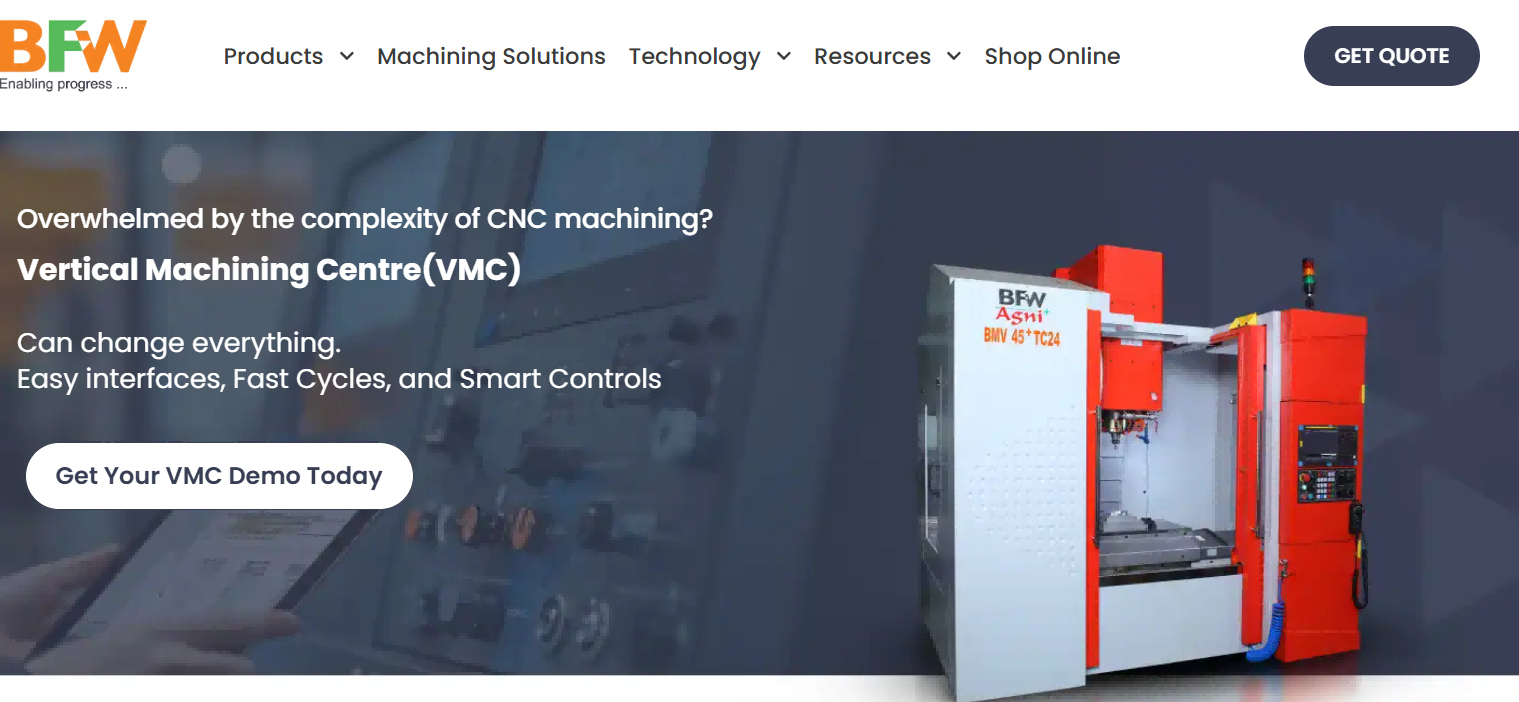
 

Bharat Fritz Werner Limited 


Type of Business: Manufacturer of CNC machine tools, advanced manufacturing technologies, and smart manufacturing solutions.

Location: India

Year Established: 1961

Manufacturer Introduction:

Bharat Fritz Werner Limited (BFW) was established in 1961 in collaboration with Fritz Werner Werkzeugmaschinen GmbH, Germany, and has grown into one of India's established CNC machine tool manufacturers.

The company has more than 60 years of experience in machine tool manufacturing and has evolved from a traditional machine manufacturer into a next-generation technology solutions provider serving domestic and global customers.

BFW manufactures CNC machining and turning solutions, including vertical machining centers, horizontal machining centers, turn-mill machines, and special-purpose machines.

BFW provides advanced machining solutions for automotive, aerospace, defense, medical, electronics, agriculture, and heavy engineering industries.

Business Scope:

  • CNC Vertical Machining Centers
  • CNC Horizontal Machining Centers
  • CNC Horizontal and Vertical Turning Centers
  • 5-Axis and Turn-Mill Machines
  • Gantry and Double-Column Machining Centers
  • Special-Purpose and Engineered Machines
  • Smart Manufacturing, IoT, and Automation Solutions

Recommended Reason:

BFW is a strong choice for manufacturers seeking precision-focused CNC machines backed by extensive industry experience and advanced technology. Its broad product range, R&D capabilities, global installations, and focus on automation make it suitable for manufacturers with demanding production and machining requirements.


3. Leader Machine Tools
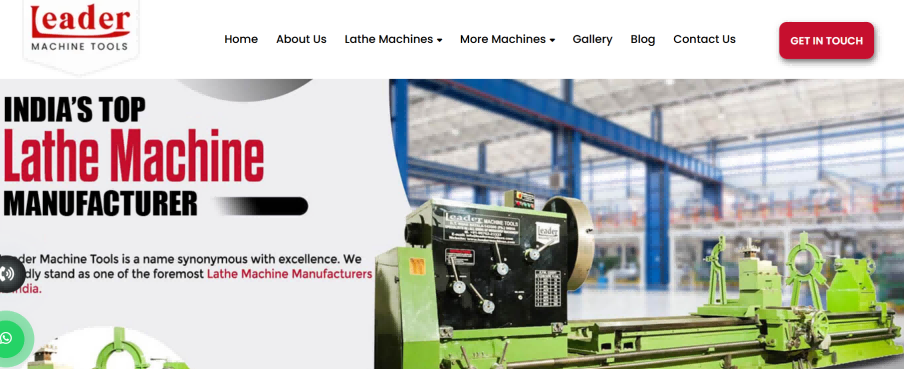
 

Leader Machine Tools


Type of Business: Manufacturer, supplier, and exporter of lathe machines, VTLs, milling machines, and industrial workshop machinery.

Location: India

Year Established: 1971

Manufacturer Introduction:

Leader Machine Tools was founded in 1971 by Shri Darshan Lal Sehdev and has developed into an established Indian manufacturer of industrial machine tools with more than five decades of engineering experience.

The company has built its reputation around precision, durability, and cost-effective machinery, and has served large industrial manufacturing units across India and international markets.

Leader Machine Tools manufactures a wide range of machines, including conventional and CNC lathe machines, vertical turning lathes, planer and milling machines, and customized workshop machinery.

The company supplies machines to industries such as railways, cement, textile, power, defense, automotive, and general engineering.

Business Scope:

  • Conventional and CNC Lathe Machines
  • CNC Roll and Big Bore Lathe Machines
  • Vertical Turning Lathe Machines
  • Planer and Plano Milling Machines
  • Radial Drilling and Workshop Machines
  • Customized Industrial and Special-Purpose Machines
  • Machine Installation, Support, and Spare Parts

Recommended Reason:

Leader Machine Tools is a suitable choice for manufacturers looking for durable and cost-effective lathe and workshop machinery. Its more than 50 years of manufacturing experience, in-house production capabilities, customization options, and established customer base make it a reliable option for heavy-duty and general industrial applications.


4. CNCYangsen
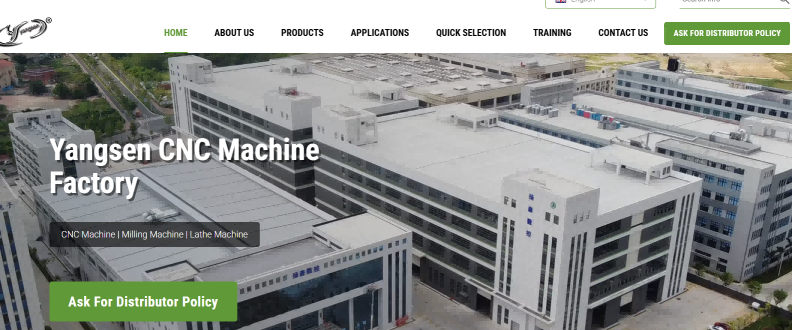
 

CNCYangsen


Type of Business: Manufacturer and exporter of CNC machine tools, machining centers, and precision manufacturing equipment.

Location: India

Year Established: 2007

Manufacturer Introduction:

The company’s manufacturing journey began in 2007, when founder Mr. Lin Yangbo transitioned from machine-tool distribution to manufacturing after gaining extensive experience serving customers in Fujian.

The company focuses on combining precision, rigidity, reliability, and cost-effectiveness in its CNC machinery.

Yangsen operates manufacturing facilities and maintains capabilities covering casting, machining, sheet-metal processing, assembly, research and development, and quality control.

The company states that its manufacturing area exceeds 10,0000 square meters and that it has an annual production capacity of more than 5,000 machine sets.

Business Scope:

  • CNC Vertical Machining Centers
  • CNC Horizontal Machining Centers
  • CNC Gantry and Double-Column Machining Centers
  • CNC Drilling and Tapping Centers
  • CNC Horizontal Boring Machining Centers
  • CNC Vertical Lathe and Turning Machines

Recommended Reason:

Yangsen is a suitable option for manufacturers looking for cost-effective CNC machine tools with a focus on precision, rigidity, and reliable performance. Its range of vertical, horizontal, gantry, drilling, boring, and turning solutions allows manufacturers to select equipment according to different machining requirements.


5. Esskay Lathe & Machine Tools

 

Esskay Lathe & Machine Tools


Type of Business: Manufacturer, supplier, and exporter of lathe machines, CNC machines, milling machines, drilling machines, and industrial machine tools.

Location: India

Year Established: 1982

Manufacturer Introduction:

Esskay Lathe & Machine Tools was established in 1982 and has developed into a well-known manufacturer and exporter of industrial machine tools, with a strong presence in India.

The company has built its reputation by focusing on reliable machine performance, quality raw materials, precision engineering, and cost-effective solutions for different industrial machining requirements.

Esskay manufactures a wide range of machines, including all-geared and heavy-duty lathe machines, CNC lathes, milling machines, drilling machines, shaper machines, planer machines, and other workshop equipment.

Esskay has experienced professionals, quality assurance processes, modern machine tool technology, and a dealership network across major Indian cities.

Business Scope:

  • Heavy-Duty Lathe Machines
  • CNC Lathe Machines
  • Milling and Planer Machines
  • Drilling and Radial Drilling Machines
  • Shaper and Power Press Machines
  • Horizontal Boring Machines

Recommended Reason:

Esskay Lathe & Machine Tools is a suitable choice for manufacturers looking for reliable and economical machine tools with a wide product range. Its long manufacturing experience, focus on quality, low-maintenance machine designs, and domestic and international supply network make it a practical option for diverse industrial applications.


6. ABL Machine Tools
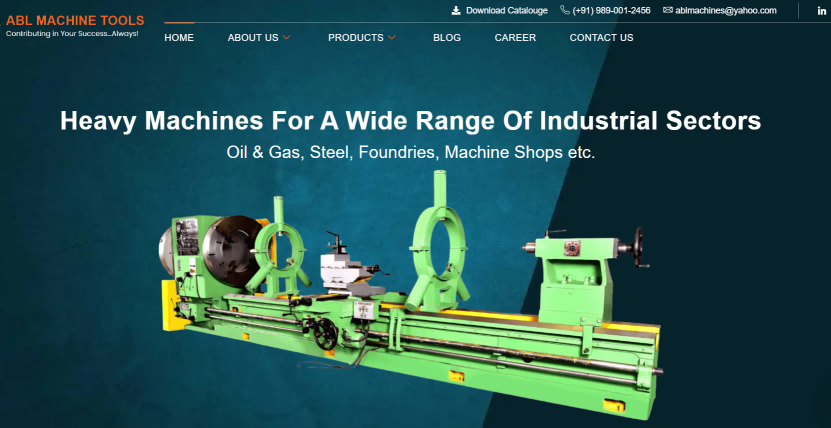
 

ABL Machine Tools


Type of Business: Manufacturer and exporter of heavy-duty CNC and conventional machine tools for industrial applications.

Location: India

Year Established: 1985

Manufacturer Introduction:

ABL Machine Tools was established in 1985, with its roots in machine tool design, and has grown into an established manufacturer of heavy-duty and specialized machine tools.

The company has developed extensive expertise in designing and manufacturing large and extra-heavy machines, serving demanding applications where durability, precision, and reliable performance are essential.

ABL manufactures heavy-duty lathes, oil country lathes, vertical turning lathes, roll turning machines, borers, milling machines, drilling machines, and hydraulic equipment.

Its machines are supplied to industries such as oil and gas, steel, power, cement, mining, heavy engineering, fabrication, and shipbuilding.

Business Scope:

  • Heavy-Duty CNC and Conventional Lathe Machines
  • Vertical Turning Lathes
  • Facing Lathe Machines
  • Boring Machines
  • Radial Drilling Machines
  • Special-Purpose and Customized Machine Tools

Recommended Reason:

ABL Machine Tools is a strong option for industries requiring heavy-duty and customized machine tools for demanding production environments. Its extensive experience, broad product portfolio, export presence, and expertise in large-scale industrial machinery make it suitable for heavy engineering and specialized machining applications.


7. Macpower Industries
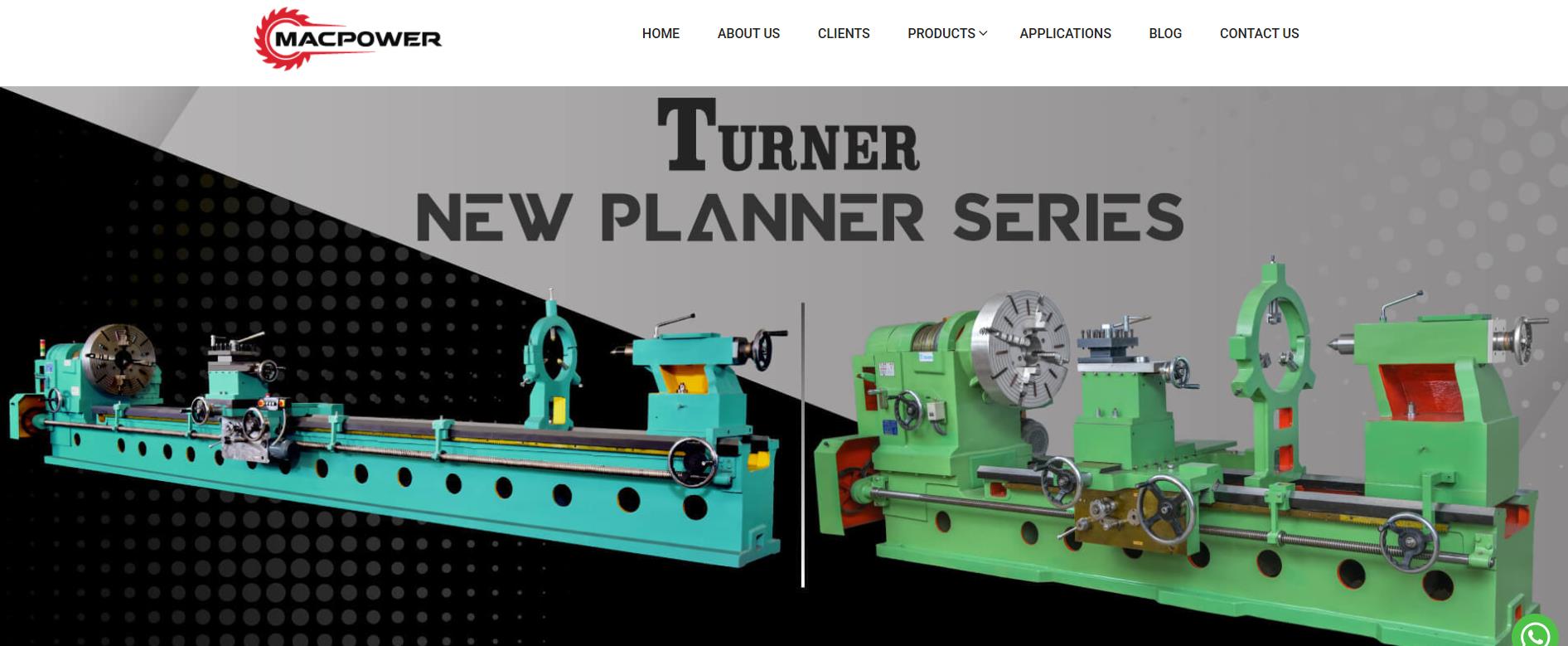
 

Macpower Industries


Type of Business: Manufacturer of lathe machines, milling machines, drilling machines, and special-purpose machines.

Location: India

Year Established: 1985

Manufacturer Introduction:

Macpower Industries was established in 1985 with a focus on manufacturing light-duty and heavy-duty centre lathe machines and has grown into an established machine tool manufacturer.

The company has developed a strong reputation through its TURNER and TURBO brands, with thousands of machines operating across India and international markets.

Macpower Industries manufactures a wide range of machines, including light, medium, and heavy-duty lathes, all-geared lathe machines, milling machines, drilling machines, and special-purpose machines for different industrial requirements.

CAD-based design facilities, quality control systems, and a well-equipped manufacturing workshop, the company focuses on producing cost-effective machines with reliable performance and long service life.

Business Scope:

  • Light, Medium, and Heavy-Duty Lathe Machines
  • All-Geared Lathe Machines
  • Milling Machines
  • Drilling Machines
  • Special-Purpose Machines (SPM)
  • Semi-Automatic and Automatic Milling Solutions

Recommended Reason:

Macpower Industries is a suitable choice for manufacturers looking for reliable and cost-effective machine tools with a wide range of configurations. Its long manufacturing experience, established brands, engineering capabilities, and focus on quality control make it a practical option for various machining applications.


8. Hindustan Export & Import Corporation Pvt. Ltd. (HEI)
 

Hindustan Export & Import Corporation Pvt. Ltd.


Type of Business: CNC machine supplier and dealer providing advanced machine tools, machining solutions, and after-sales services.

Location: India

Year Established: 1945

Manufacturer Introduction:

It was founded in 1945 by Mr. K.K. Grover and has developed into an established supplier and dealer of advanced CNC machines and machine tools in India.

The company has built its reputation by bringing sophisticated machinery from leading international manufacturers to Indian industries and has developed a nationwide marketing.

HEI offers CNC turning, milling, grinding, multitasking, sliding-head, tapping, and cutting machines from established global brands to meet different manufacturing requirements.

Supported by experienced engineers, sales offices, service centers, and long-standing international partnerships, it provides machine selection assistance, technical support, maintenance, troubleshooting, and after-sales services to industries across India.

Business Scope:

  • CNC Turning and Lathe Machines
  • CNC Milling and Machining Centers
  • CNC Grinding Machines
  • CNC Multitasking Machines
  • CNC Sliding Head Machines
  • CNC Tapping and Cutting Machines

Recommended Reason:

HEI is a suitable choice for manufacturers seeking advanced CNC machinery from established international brands along with technical and after-sales support. Its long industry history, nationwide presence, experienced engineering team, and global machine-tool partnerships make it a reliable option for precision manufacturing requirements.


9. Premier Lathe Manufacturing Company
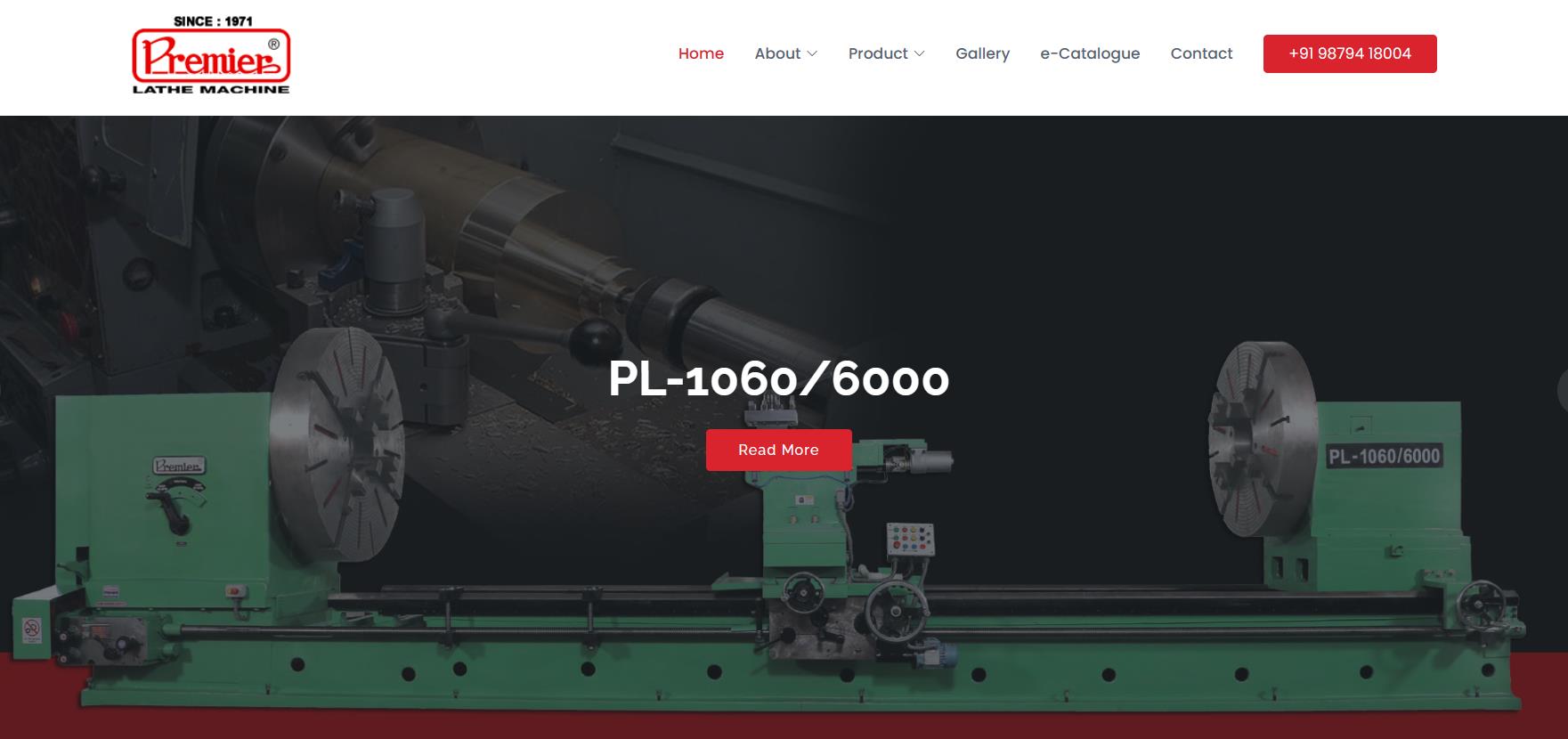
 

Premier Lathe Manufacturing Company


Type of Business: Manufacturer and exporter of conventional lathe machines, heavy-duty lathe machines, precision lathes, roll-turning machines, and industrial machine tools.

Location: India

Year Established: 1971

Manufacturer Introduction:

Premier Lathe Manufacturing Company was established in 1971 and has developed into an experienced Indian manufacturer and exporter of lathe machines.

The company has built its reputation around the manufacturing of reliable, durable, and precision-focused lathe machines for different workshop and industrial machining requirements.

The company focuses on using quality raw materials, precision manufacturing processes, and strict quality-control procedures to provide machines with consistent performance and long service life.

Its machines incorporate features such as induction-hardened bed ways, high-quality cast-iron beds, hardened and ground headstock spindles, and alloy-steel tailstock spindles.

Business Scope:

  • Light-Duty Lathe Machines
  • Medium-Duty Lathe Machines
  • Heavy-Duty Lathe Machines
  • Extra Heavy-Duty Lathe Machines
  • Drill Machines
  • Customized Lathe Machine Solutions

Recommended Reason:

Premier Lathe Manufacturing Company is a suitable choice for manufacturers looking for conventional, heavy-duty, and precision lathe machines from an experienced Indian manufacturer. It is a practical option for workshops and industries requiring reliable turning and machining equipment.


10. Daljit Machines
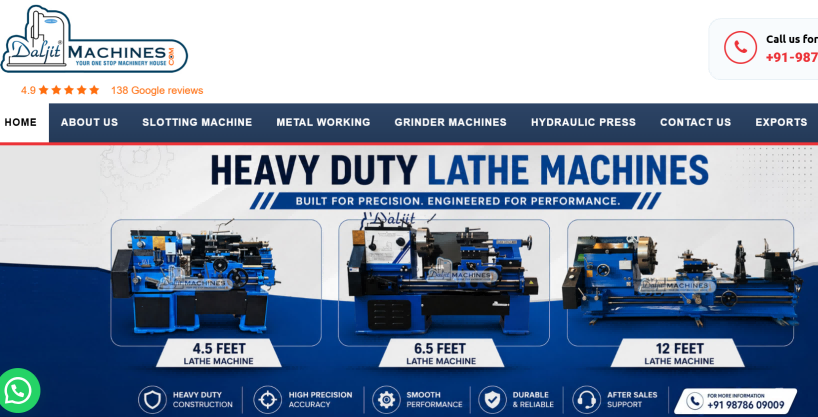
 Daljit Machines


Type of Business: Manufacturer, supplier, and exporter of industrial machine tools, lathe machines, milling machines, drilling machines, shaper machines, hydraulic presses, and workshop machinery.

Location: India

Year Established: 1968

Manufacturer Introduction:

Daljit Machines was established in 1968 and has developed into an established Indian manufacturer and exporter of industrial machine tools with manufacturing experience.

The company manufactures a broad range of machinery for workshops, factories, engineering industries, and other industrial applications.

Its product portfolio includes medium and heavy-duty lathe machines, all-geared lathes, drilling machines, shaper machines, slotting machines, bandsaw machines, hacksaw machines, hobbing machines, and grinding machines.

Daljit Machines focuses on manufacturing durable and cost-effective machinery designed for long-term shop-floor performance.

The company also highlights its manufacturing infrastructure and foundry capabilities for producing cast-iron machine components, supporting its ability to manufacture robust industrial machinery.

Business Scope:

  • Medium-Duty Lathe Machines
  • Heavy-Duty Lathe Machines
  • Bench Lathe Machines
  • Tool and Cutter Grinders
  • Surface Grinders
  • Customized Industrial Machinery

Recommended Reason:

Daljit Machines is a suitable choice for manufacturers looking for durable and cost-effective conventional machine tools with a broad range of industrial applications. It makes a strong option for workshops, engineering companies, and heavy industrial applications.


11. Rajkot Machine Tools
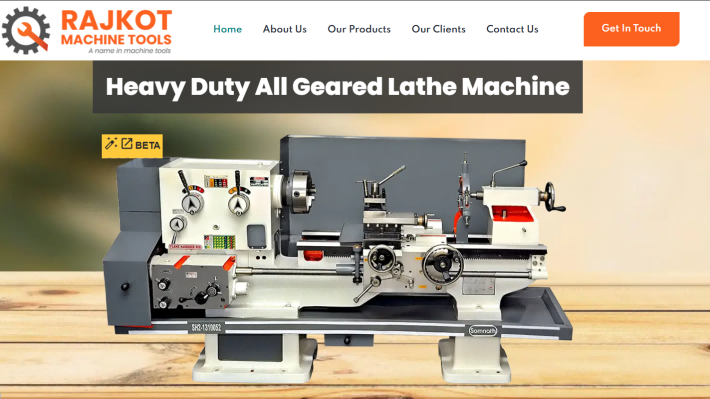
 

Rajkot Machine Tools


Type of Business: Manufacturer and supplier of conventional and all-geared lathe machines, milling machines, drilling machines, and industrial workshop machinery.

Location: India

Year Established: 1980

Manufacturer Introduction:

Rajkot Machine Tools was established in 1980 and manufactures lathe machines under the Somnath brand.

The company offers a range of conventional and industrial machines designed around durability, low maintenance, dependable performance, and cost-effective operation.

It focuses on quality-controlled manufacturing and uses selected materials and components to meet the requirements of different industrial applications.

Business Scope:

  • Light Duty Lathe Machines
  • Medium Duty Lathe Machines
  • Heavy Duty Lathe Machines
  • All-Geared Lathe Machines
  • Manual Lathe Machines
  • Milling Machines
  • Customized Lathe Machine Solutions

Recommended Reason:

Rajkot Machine Tools is a suitable choice for manufacturers and workshops looking for dependable and cost-effective conventional lathe machines. Its more than four decades of experience, the Somnath brand, a broad machine range, a focus on quality assurance, and the ability to serve diverse industrial applications.


12. S&T Machinery
 

S&T Machinery


Type of Business: Manufacturer of CNC machine tools, machining centers, turning solutions, grinding machines, and advanced manufacturing equipment.

Location: India

Year Established: 2015

Manufacturer Introduction:

S&T Machinery, the manufacturing unit of S&T Group, was established in 2015 with a focus on making advanced CNC technology more accessible to Indian manufacturers.

It manufactures CNC machines through a combination of Taiwanese engineering technology and Indian manufacturing capabilities under the Make in India initiative.

The company has completed thousands of machine installations across different manufacturing segments and provides sales & service support through a nationwide network.

Its portfolio includes vertical and horizontal machining centers, high-speed production machines, graphite machining centers, and 5-axis machining centers.

Business Scope:

  • CNC Vertical Machining Centers
  • High-Speed Production VMCs
  • Horizontal Machining Centers
  • Double-Column Machining Centers
  • 5-Axis Machining Centers
  • Drill Tap Centers

Recommended Reason:

S&T Machinery is a strong choice for manufacturers seeking modern CNC machining solutions with a combination of advanced technology, Indian manufacturing, and nationwide technical support.


13. Lokesh Machines Limited
 

Lokesh Machines Limited 

Type of Business: Manufacturer of CNC machine tools, special-purpose machines, and precision-machined auto components.

Location: India

Year Established: 1983

Manufacturer Introduction:

Lokesh Machines Limited was incorporated in 1983 and started commercial operations in 1985 in Hyderabad.

Lokesh specializes in CNC machine tools and customized special-purpose machines designed for demanding machining applications.

The company supplies machines to automotive OEMs, auto-component manufacturers, general industries, and international markets.

Its CNC machines have been exported to countries including Japan, Germany, the Netherlands, Italy, Turkey, China, and Middle Eastern markets.

Business Scope:

  • CNC Machine Tools
  • Finish Milling Machines
  • Customized Automotive Machining Solutions
  • CNC Machining Solutions
  • Machined Engine Cylinder Blocks
  • Fractured Connecting Rods

Recommended Reason:

Lokesh Machines Limited is a strong choice for manufacturers seeking specialized CNC and production machining solutions, particularly for automotive and high-volume manufacturing applications. It is suitable for companies requiring precision machining and automated production systems.


14. Tirupati CNC Products
 

Tirupati CNC Products


Type of Business: Manufacturer and supplier of CNC lathe machines, CNC turning machines, drilling machines, VMC machines, conventional lathes, and industrial machinery.

Location: India

Year Established: 1988

Manufacturer Introduction:

Tirupati CNC Products was established in 1988 as Tirupati Hydraulics in Rajkot, Gujarat, initially manufacturing different types of conventional lathe machines.

Tirupati CNC Products has expanded its product portfolio to include flat-bed CNC lathes, slant-bed CNC turning machines, CNC turn-mill machines, CNC oil-country lathes, CNC drilling machines, and VMC drilling machines.

The company operates a dedicated infrastructure covering manufacturing, quality control, research and development, sales, and marketing.

Its machines are developed using modern manufacturing technology and are available in different configurations to meet industrial machining requirements.

Business Scope:

  • Flat Bed CNC Lathe Machines
  • CNC Roll Turning Lathe Machines
  • CNC Turn-Mill Machines
  • CNC Drilling Machines
  • VMC Drilling Machines
  • VMC Machines
  • VTL Machines

Recommended Reason:

Tirupati CNC Products is a suitable choice for manufacturers looking for a broad range of CNC and conventional machining equipment from an experienced Rajkot-based manufacturer. Its focus on timely delivery makes it a practical option for automotive, engineering, fabrication, and general manufacturing applications.


FAQs

1. What is a lathe machine?

A lathe machine is a machine tool used to rotate a workpiece while cutting tools remove material. It performs operations such as turning, facing, threading, drilling, and boring, and is widely used in various manufacturing industries.

2. Which industries commonly use lathe machines?

Lathe machines are widely used in automotive, aerospace, defense, oil and gas, railway, power, heavy engineering, fabrication, and general manufacturing industries for producing accurate and reliable components.

3. What types of lathe machines are available from Indian manufacturers?

Indian manufacturers offer conventional, all-geared, heavy-duty, CNC lathe, CNC turning, vertical turning, roll turning, oil-country, and customized lathe machines. The right machine depends on the workpiece, production volume, and machining requirements.

4. How do I choose the right lathe machine manufacturer in India?

Consider factors such as machine precision, build quality, product range, customization options, manufacturing experience, CNC technology, after-sales support, spare parts availability, and service network before selecting a manufacturer.

5. What are the advantages of CNC lathe machines over conventional lathe machines?

CNC lathe machines provide higher accuracy, repeatability, productivity, and automation. They are suitable for complex machining operations, high-volume production, and applications requiring consistent machining quality.


Conclusion

Choosing the right lathe machine manufacturer is essential for achieving machining accuracy, reliable production, and long-term efficiency. The manufacturers listed in this guide offer different solutions, from conventional and heavy-duty lathes to advanced CNC turning and vertical turning machines.

For manufacturers seeking cost-effective and reliable CNC machining solutions, CNC Yangsen offers CNC vertical lathe and turning machines with a focus on precision, rigidity, and reliable performance. Contact CNC Yangsen today to explore the right CNC solution for your machining and production requirements.

Advantages of High-Speed Machining Centers

2026-08-13

Is a high-speed machining center really worth the investment? For many manufacturers, the answer is yes—but not simply because it runs faster. A well-designed high-speed machining center can shorten cycle times, improve machining accuracy, deliver better surface finishes, and increase overall productivity.

In this article, we'll explore the key advantages of high-speed machining centers, explain why they're becoming the preferred choice for modern manufacturing, and show what features truly define high-performance machining.


What Is a High-Speed Machining Center?

A high-speed machining center is a CNC machine designed to machine parts at higher cutting speeds and feed rates while maintaining excellent accuracy and stability. Compared with a conventional machining center, it is built to complete machining tasks more efficiently, making it ideal for industries that require high precision, superior surface quality, and shorter production cycles.

The biggest difference is that high-speed machining is about overall machine performance, not simply higher spindle speed. A true high-speed machining center combines a rigid machine structure, responsive servo system, high-performance spindle, and advanced CNC control to achieve faster acceleration, smoother cutting, and more consistent machining results.


High Speed Machining Center


High-Speed Machining vs Conventional Machining

While both machines perform milling, drilling, tapping, and boring operations, their performance differs significantly in demanding production environments.

A conventional machining center is well suited for general machining and heavy cutting applications. In contrast, a high-speed machining center is optimized for high-efficiency production, allowing manufacturers to reduce cycle times, achieve finer surface finishes, and machine complex parts with greater accuracy.

Whether producing precision molds, aluminum aerospace components, or high-volume automotive parts, a high-speed machining center enables manufacturers to improve productivity without compromising machining quality.


Why High-Speed Machining Is Becoming the Industry Standard

Manufacturing is evolving rapidly, and traditional machining methods are no longer enough for many modern production environments. As products become more complex and customers expect faster delivery, manufacturers need machining solutions that can keep pace without compromising quality. This shift is one of the main reasons why high-speed machining centers are becoming the industry standard.


Shorter Product Development Cycles

Product life cycles are becoming shorter across industries. New models and custom designs reach the market faster than ever, leaving manufacturers with less time for production. High-speed machining helps companies respond more quickly by reducing machining time and increasing production capacity.


Higher Demand for Precision Parts

Industries such as aerospace, medical, electronics, and mold manufacturing require tighter tolerances and better surface quality. As quality standards continue to rise, manufacturers are increasingly turning to high-speed machining to achieve more consistent machining results.


Growing Labor Costs

Hiring skilled machinists is becoming more expensive in many regions. Rather than relying solely on additional labor or longer working hours, manufacturers are investing in more efficient equipment that can produce more parts within the same production time.


Smart Manufacturing and Automation

Modern factories are moving toward automation and intelligent manufacturing. High-speed machining centers integrate more easily with automated production lines, robotic loading systems, and digital manufacturing processes, helping companies improve productivity while supporting future production upgrades.


 Why High-Speed Machining Is Becoming the Industry Standard


The Key Advantages of High-Speed Machining Centers


A high-speed machining center offers far more than faster spindle speeds. It helps manufacturers improve productivity, maintain consistent quality, and reduce overall production costs. Here are the key benefits that make high-speed machining an increasingly popular choice across modern manufacturing.


Faster Production Cycles

Higher cutting speeds, rapid tool changes, and faster axis movements significantly reduce machining time. This allows manufacturers to produce more parts within the same working hours, shorten delivery times, and increase overall production capacity without adding more machines.


Superior Surface Finish

High-speed machining produces smoother surfaces and cleaner cutting edges, reducing or even eliminating the need for secondary finishing processes. This not only saves time but also improves the overall appearance and quality of finished parts.


Higher Machining Accuracy

A well-designed high-speed machining center maintains excellent stability during high-speed cutting, helping achieve tighter tolerances and more consistent machining results. This is especially important for industries where precision directly affects product performance.


Lower Manufacturing Costs

Although the initial investment may be higher, high-speed machining helps reduce the cost per part over time. Shorter cycle times, fewer finishing operations, lower scrap rates, and improved machine utilization all contribute to lower overall manufacturing costs.


Longer Tool Life

Modern high-speed machining uses optimized cutting strategies that reduce cutting forces and improve chip evacuation. With proper tooling and machining parameters, tools experience more stable cutting conditions, helping extend tool life and reduce replacement frequency.


Greater Capability for Complex Parts

High-speed machining is ideal for producing complex geometries, deep cavities, thin-wall structures, and intricate contours. It enables manufacturers to machine demanding components more efficiently while maintaining excellent dimensional accuracy and surface quality.


Improved Production Flexibility

Whether machining aluminum, steel, titanium, or composite materials, a high-speed machining center can adapt to a wide range of production requirements. This flexibility allows manufacturers to respond quickly to changing customer demands and a wider variety of machining projects.


What Makes a High-Speed Machining Center Truly High Performance?

Not every machine with a high spindle speed qualifies as a true high-speed machining center. Sustainable high-speed machining depends on the entire machine system working together. From the machine structure to the spindle, CNC control, and thermal stability, every component plays a critical role in maintaining speed, accuracy, and long-term reliability.


High-Rigidity Machine Structure

High-speed machining generates greater dynamic forces than conventional machining. A rigid machine structure minimizes vibration and deformation, ensuring stable cutting even during rapid acceleration and continuous operation. This allows the machine to maintain high accuracy while extending tool life.


High-Speed, High-Precision Spindle

The spindle is at the heart of every high-speed machining center. It must deliver high rotational speeds while maintaining low vibration, excellent rigidity, and reliable thermal performance. A well-designed spindle provides smooth cutting, consistent surface quality, and dependable performance during long production runs.


Responsive CNC Control System

High-speed machining requires more than fast hardware—it also depends on intelligent control. An advanced CNC system processes machining data quickly, optimizes tool paths, and ensures smooth multi-axis movements. The result is higher machining efficiency, better contour accuracy, and more stable cutting performance.


High-Performance Motion System

Precision linear guideways, ball screws, and servo motors allow the machine to accelerate, decelerate, and position accurately at high speeds. A responsive motion system reduces positioning errors and enables smooth movement, especially when machining complex geometries.


Effective Thermal Stability

Heat generated during long machining cycles can affect machine accuracy. High-performance machining centers use optimized cooling systems and thermally stable designs to minimize thermal deformation, helping maintain consistent precision from the first part to the last.


Reliable Chip Removal and Cooling

Efficient chip evacuation and coolant delivery are essential for high-speed machining. Removing chips quickly reduces heat buildup, prevents chip recutting, and protects both the cutting tool and the workpiece. This improves machining stability, extends tool life, and supports continuous production.


Typical Applications of High-Speed Machining Centers

High-speed machining centers are widely used in industries where productivity, precision, and surface quality are critical. They are particularly well suited for machining complex components, high-value parts, and products that require tight tolerances.


Mold and Die Manufacturing

High-speed machining is ideal for producing injection molds, die-casting molds, stamping dies, and graphite electrodes. It delivers excellent surface finishes and accurate contour machining, reducing polishing time and shortening mold manufacturing cycles.

 Mold and Die Manufacturing


Aerospace Industry

Aircraft structural parts, engine components, and aluminum alloy parts often feature thin walls and complex geometries. High-speed machining minimizes deformation while maintaining high accuracy, making it an excellent choice for aerospace manufacturing.


Automotive Industry

From cylinder heads and transmission housings to battery trays and lightweight structural components, high-speed machining helps manufacturers improve production efficiency while maintaining consistent quality in both prototype and mass production.


Medical Device Manufacturing

Medical implants, surgical instruments, and precision medical components require exceptional dimensional accuracy and smooth surface finishes. High-speed machining enables manufacturers to produce these critical parts with greater consistency and reliability.


Electronics and Precision Engineering

Components such as heat sinks, communication housings, semiconductor fixtures, and precision mechanical parts often involve small features and intricate machining. High-speed machining improves machining efficiency while ensuring excellent dimensional accuracy and surface quality.


How to Choose the Right High-Speed Machining Center

Choosing the right high-speed machining center isn't simply about selecting the highest spindle speed. The best machine is the one that matches your parts, materials, production volume, and long-term business goals. Before making a decision, consider the following factors.


Match the Machine to Your Workpiece

Start by evaluating the size, weight, and complexity of the parts you machine most often. Large molds, thin-wall aerospace components, and precision medical parts all have different machining requirements. Selecting a machine with the right travels, table size, and rigidity ensures better productivity and machining accuracy.


Consider the Materials You Machine

Different materials require different machining characteristics. Aluminum and graphite often benefit from higher spindle speeds, while stainless steel, titanium, and hardened steel demand greater rigidity and cutting stability. Choosing a machine designed for your primary materials helps maximize performance and tool life.


Evaluate Accuracy and Surface Finish Requirements

If your products require tight tolerances or high-quality surface finishes, look beyond spindle speed. Machine rigidity, thermal stability, positioning accuracy, and CNC control performance all have a direct impact on the quality of the finished part.


Choose the Right Configuration

A high-speed machining center should be equipped with configurations that support efficient and stable production. Depending on your application, consider features such as high-speed spindles, through-spindle coolant, automatic tool changers, high-performance guideways, tool measurement systems, and chip management solutions.


Consider Future Production Needs

Your production requirements may grow over time. Investing in a machine with expansion options or automation compatibility can help support future business development while reducing the need for additional equipment upgrades.


Work with an Experienced Manufacturer

A reliable supplier provides more than just a machine. Engineering support, application advice, installation, operator training, spare parts availability, and responsive after-sales service all contribute to long-term production success. Choosing an experienced manufacturer helps reduce risks and ensures reliable operation throughout the machine's service life.


FAQs

1. What spindle speed is considered high-speed machining?

There is no universal spindle speed that defines high-speed machining. While many high-speed machining centers operate at 12,000–24,000 RPM or higher, true high-speed machining depends on the overall machine performance, including spindle quality, machine rigidity, CNC control, and motion system—not just spindle speed.

2. Which materials are best suited for high-speed machining?

High-speed machining performs exceptionally well on aluminum alloys, graphite, copper, plastics, and many mold steels. With the right tooling and cutting parameters, it can also machine stainless steel, titanium alloys, and hardened steel efficiently.

3. Is a high-speed machining center suitable for heavy cutting?

Not always. High-speed machining centers are primarily designed for high-efficiency finishing, semi-finishing, and precision machining. For continuous heavy roughing of large steel components, a heavy-duty machining center may be a more suitable choice. Many manufacturers combine roughing and high-speed finishing to achieve the best overall productivity.

4. Does high-speed machining reduce tool life?

When applied correctly, high-speed machining can actually extend tool life. Stable machine performance, proper cutting parameters, effective cooling, and efficient chip evacuation reduce cutting forces and heat buildup, allowing tools to perform more consistently.

5. What industries benefit the most from high-speed machining centers?

Industries that require high precision, excellent surface finishes, and fast production cycles benefit the most. These include mold and die manufacturing, aerospace, automotive, medical device production, electronics, and precision engineering.

6. How do I choose the right high-speed machining center?

Start by evaluating your workpiece size, materials, required accuracy, production volume, and budget. You should also consider machine rigidity, spindle performance, CNC control, cooling system, and the manufacturer's technical support. Choosing a machine that matches your actual production needs will deliver better long-term value than simply selecting the highest spindle speed.


Conclusion

A high-speed machining center is more than a faster machine—it's an investment in productivity, precision, and long-term competitiveness. By choosing a machine that matches your production needs, you can improve efficiency while maintaining consistent machining quality.

Looking for the right high-speed machining solution? Contact Yangsen today and let our experts help you find the best machine for your business.

Contact Yangsen CNC Factory

Classification of Machining Processes A Complete Guide

2026-08-13

Choosing the right machining process is more important than many manufacturers realize. The wrong process can increase production costs, reduce machining accuracy, shorten tool life, and even make a part impossible to produce efficiently. That's why understanding the classification of machining processes is the first step toward better manufacturing decisions.

In this guide, you'll learn the main types of machining processes, including conventional machining, abrasive machining, and non-traditional machining. We'll also explain where each process is used and how to choose the right machining method for different materials, part designs, and production requirements.


What Is a Machining Process?

A machining process is a manufacturing method that removes material from a workpiece to achieve the required shape, size, and surface finish. It is widely used to produce high-precision metal and plastic parts for industries such as aerospace, automotive, mold making, and medical manufacturing.

Modern machining includes various types of machining processes, from conventional cutting methods like turning and milling to advanced processes such as EDM and laser machining. Each process has its own advantages, making it suitable for different materials, part geometries, and machining requirements.


How Are Machining Processes Classified?

There are many ways to classify machining processes, but the most common approach is based on how material is removed from the workpiece. Using this method, machining processes are generally divided into three main categories:

  • Conventional Machining – Material is removed by direct contact between a cutting tool and the workpiece, such as turning, milling, and drilling.
  • Abrasive Machining – Abrasive tools are used to achieve higher accuracy and better surface finishes, including grinding, honing, and lapping.
  • Non-Traditional Machining – Material is removed using electrical, thermal, chemical, or high-energy methods, such as EDM, laser machining, and waterjet cutting.

Each classification is designed for different materials, part geometries, precision requirements, and production applications.


Conventional Machining Processes

Conventional machining removes material through direct contact between a cutting tool and the workpiece. It is the most widely used category of machining because it offers high efficiency, stable accuracy, and cost-effective production. These processes are suitable for most metals and engineering plastics and are commonly performed on CNC lathes, machining centers, and boring machines.


Turning

Turning is used to machine rotating workpieces into cylindrical shapes. It is ideal for producing shafts, bushings, pins, threads, and other round parts with high dimensional accuracy and smooth surface finishes.

CNC Turning


Milling

Milling uses a rotating cutting tool to machine flat surfaces, slots, pockets, contours, and complex 3D features. It is one of the most versatile machining processes and is widely used in mold making, aerospace, automotive, and general manufacturing.


Drilling

Drilling creates accurate round holes for bolts, fasteners, cooling channels, and assembly features. It is often the first step before tapping, reaming, or boring operations.


Boring

Boring improves the size, roundness, and surface finish of pre-drilled holes. It is commonly used for bearing seats, engine blocks, hydraulic cylinders, and other components that require high hole accuracy.


 Boring Machining


Reaming

Reaming is a finishing operation that removes a small amount of material from an existing hole to achieve tighter tolerances and a smoother surface finish. It is often used for precision assembly parts.


Broaching

Broaching removes material with a multi-tooth cutting tool in a single pass. It is highly efficient for producing keyways, splines, internal profiles, and other repeatable features in mass production.


 CNC Broaching


Abrasive Machining Processes

Unlike conventional machining, abrasive machining removes material using abrasive particles instead of standard cutting tools. These processes are mainly used as finishing operations to achieve tighter tolerances, smoother surface finishes, and higher dimensional accuracy.


Grinding

Grinding uses a rotating abrasive wheel to remove a small amount of material from the workpiece. It is widely used to finish hardened steel, precision molds, gears, bearing components, and other parts that require excellent accuracy and surface quality.


Honing

Honing is used to improve the geometry and surface finish of internal holes. It is commonly used on engine cylinders, hydraulic cylinders, and precision bores where smooth surfaces and precise dimensions are essential.


hydraulic cylinders


Lapping

Lapping is an ultra-precision finishing process that uses fine abrasive compounds to create exceptionally flat and smooth surfaces. It is often used for optical components, sealing surfaces, gauges, and other high-precision parts.


 Lapping Machining


Non-Traditional Machining Processes

Non-traditional machining removes material without direct contact between a conventional cutting tool and the workpiece. Instead, it uses electrical, thermal, or high-pressure energy to machine hard materials, delicate components, or complex geometries that are difficult to produce with conventional machining. These processes are widely used in aerospace, medical, electronics, and mold manufacturing.


Electrical Discharge Machining (EDM)

EDM removes material through controlled electrical sparks between an electrode and the workpiece. It is ideal for machining hardened steels, complex mold cavities, sharp internal corners, and intricate profiles without applying cutting forces.


Wire EDM

Wire EDM uses a continuously moving wire electrode to cut precise contours and narrow slots. It is commonly used for dies, punches, precision tooling, and components that require extremely tight tolerances.


Laser Machining

Laser machining uses a focused laser beam to cut, drill, or engrave materials with high precision. It is well suited for thin metals, micro-components, medical devices, and electronic parts where minimal heat distortion is required.


 Laser Machining


Waterjet Cutting

Waterjet cutting removes material using a high-pressure stream of water mixed with abrasive particles. Because it generates no heat-affected zone, it is an excellent choice for cutting metals, composites, ceramics, glass, and heat-sensitive materials while maintaining excellent edge quality.


Comparison of Different Machining Process Classifications

Each machining classification has its own strengths and is designed for different manufacturing needs. The table below compares the three main categories to help you quickly understand their differences.

Classification

Typical Processes

Best For

Main Advantages

Limitations

Conventional Machining

Turning, Milling, Drilling, Boring

General metal cutting, high production efficiency

Cost-effective, versatile, suitable for most materials

Limited when machining extremely hard materials or intricate features

Abrasive Machining

Grinding, Honing, Lapping

High-precision finishing and superior surface quality

Excellent accuracy and surface finish

Lower material removal rate, mainly used as a finishing process

Non-Traditional Machining

EDM, Wire EDM, Laser Machining, Waterjet Cutting

Hard materials, complex geometries, delicate components

Can machine difficult materials and intricate shapes

Higher equipment cost and slower machining speed for some applications


The best machining process depends on your material, part geometry, tolerance requirements, surface finish, and production volume. In many manufacturing projects, multiple machining processes are combined to achieve the best balance between quality, efficiency, and cost.


How to Choose the Right Machining Process

There is no single machining process that works best for every project. The right choice depends on your part design, material, quality requirements, and production goals. Before selecting a machining process, consider the following factors.


Workpiece Material

Different materials require different machining methods. Aluminum and mild steel are easy to machine with conventional processes such as milling and turning. In contrast, hardened steel, titanium, ceramics, and composites may require grinding, EDM, or waterjet cutting to achieve the desired results.


Part Shape and Complexity

Simple cylindrical parts are typically produced by turning, while flat surfaces, pockets, and complex 3D geometries are better suited to milling. Components with intricate internal profiles or sharp corners often require Wire EDM or other non-traditional machining processes.


Accuracy and Surface Finish

If standard dimensional accuracy is acceptable, conventional machining is usually the most economical option. For tight tolerances or superior surface finishes, finishing processes such as grinding, honing, or lapping may be required.


Production Volume and Cost

Production quantity also affects process selection. Conventional machining is ideal for most low- and high-volume production because of its efficiency and lower operating cost. Non-traditional machining is generally chosen when conventional methods cannot achieve the required geometry or material performance, even though it may involve higher machining costs.


FAQs

1. Which machining process is the most commonly used?

Conventional machining is the most widely used category. Processes such as turning, milling, drilling, and boring are suitable for most manufacturing applications because they offer high efficiency, reliable accuracy, and cost-effective production.

2. What is the difference between conventional and non-traditional machining?

Conventional machining removes material through direct contact between a cutting tool and the workpiece. Non-traditional machining uses electrical, thermal, or high-pressure energy, making it ideal for machining hard materials, complex geometries, and delicate components.

3. Which machining process provides the best surface finish?

Grinding, honing, and lapping generally provide the best surface finish and dimensional accuracy. These abrasive machining processes are commonly used as finishing operations after conventional machining.

4. Can one part require multiple machining processes?

Yes. Many precision components are manufactured using a combination of machining processes. For example, a part may be milled to create its basic shape, drilled to produce holes, and then ground to achieve tighter tolerances and a smoother surface finish.

5. How do I choose the right machining process?

The best machining process depends on several factors, including the workpiece material, part geometry, required tolerance, surface finish, production volume, and budget. Evaluating these requirements together helps you select the most efficient and cost-effective machining solution.


Conclusion

If you're planning a new machining project or investing in CNC equipment, selecting the right machining process is only the first step. Equally important is choosing a CNC machine that delivers the accuracy, rigidity, and productivity your application demands. Working with an experienced CNC machine manufacturer can help you find the most efficient solution for your production needs and achieve consistent, high-quality results.


CNC Factory

Tags